A request to make a repair 'neat' can mean almost invisible to one person and deliberately graphic to another. If you want a mend to remain visible, the appearance deserves its own conversation. You can describe that intention without choosing a needle technique, diagnosing the damage or asking a repairer to reproduce a photograph on a different fabric.
Contrast has more than one scale
Imagine a hypothetical dark-blue garment with an area needing professional assessment. A pale patch with blue stitching, a blue patch with pale stitching and a darker patch with matching thread could all remain visible in different ways. The first changes the shape of the surface; the second makes the stitch line more prominent; the third may be noticed mainly through texture. These are aesthetic possibilities, not promises that any option is suitable for the actual damage.
Getty's formal-analysis guide distinguishes color, line and texture as elements that can be considered separately. That vocabulary is useful for saying what you like in a reference image. Instead of 'do this exactly,' try 'I like the visible outline, but not the high color contrast.' The repairer can then discuss whether that aspect is feasible.
References are a conversation, not instructions
A useful short brief might say: 'I would like the repair to read as intentional rather than concealed. I prefer a clear patch outline, low color contrast and a stitch texture that can be noticed nearby. Please explain which aspects suit this garment before proposing the work.' The wording is original; it does not authorize a method or a change to the garment.
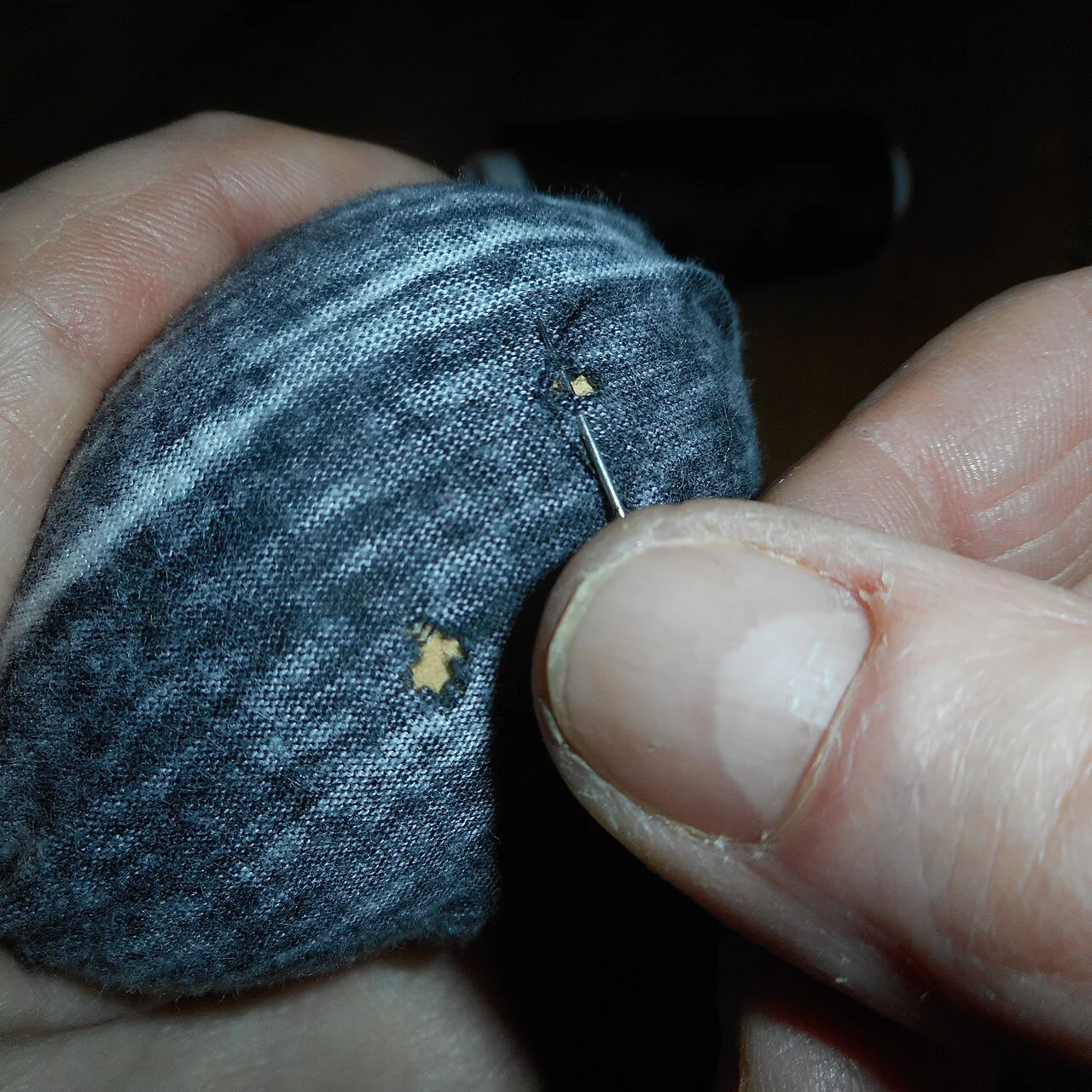
Different structures need different assessment. Woolmark's repair material distinguishes patching woven fabric from other repairs such as mending seams. Its existence does not mean every repairer offers every technique or that an online example establishes what your garment needs. Share the actual care label and discuss the material with the person doing the work rather than select a method from appearance alone.
Say what should remain unchanged
Visibility can be deliberate while the garment's broader character stays quiet. You might want the original outline to remain the main shape, or want a repair to relate to an existing color. Those preferences help a repairer explain a proposal. They do not establish that the original fit, drape or strength can be preserved under every repair option.
Ask how the proposed appearance differs from the reference and what remains uncertain. A sketch or a material sample, if the provider offers one, can clarify a visual idea without becoming a guarantee of the finished result. If the service cannot offer the kind of visible repair you mean, that is useful to know before agreeing to work.
Let the repair have its own appearance
A successful aesthetic brief does not require an imitation of someone else's patch. It gives the repairer a readable preference: what should contrast, what should blend and how prominently the repaired area should enter the garment's design. The actual technique and scope still require an appropriate proposal for the real piece.
Sources & further reading
Published sources for the details and examples discussed in this story.