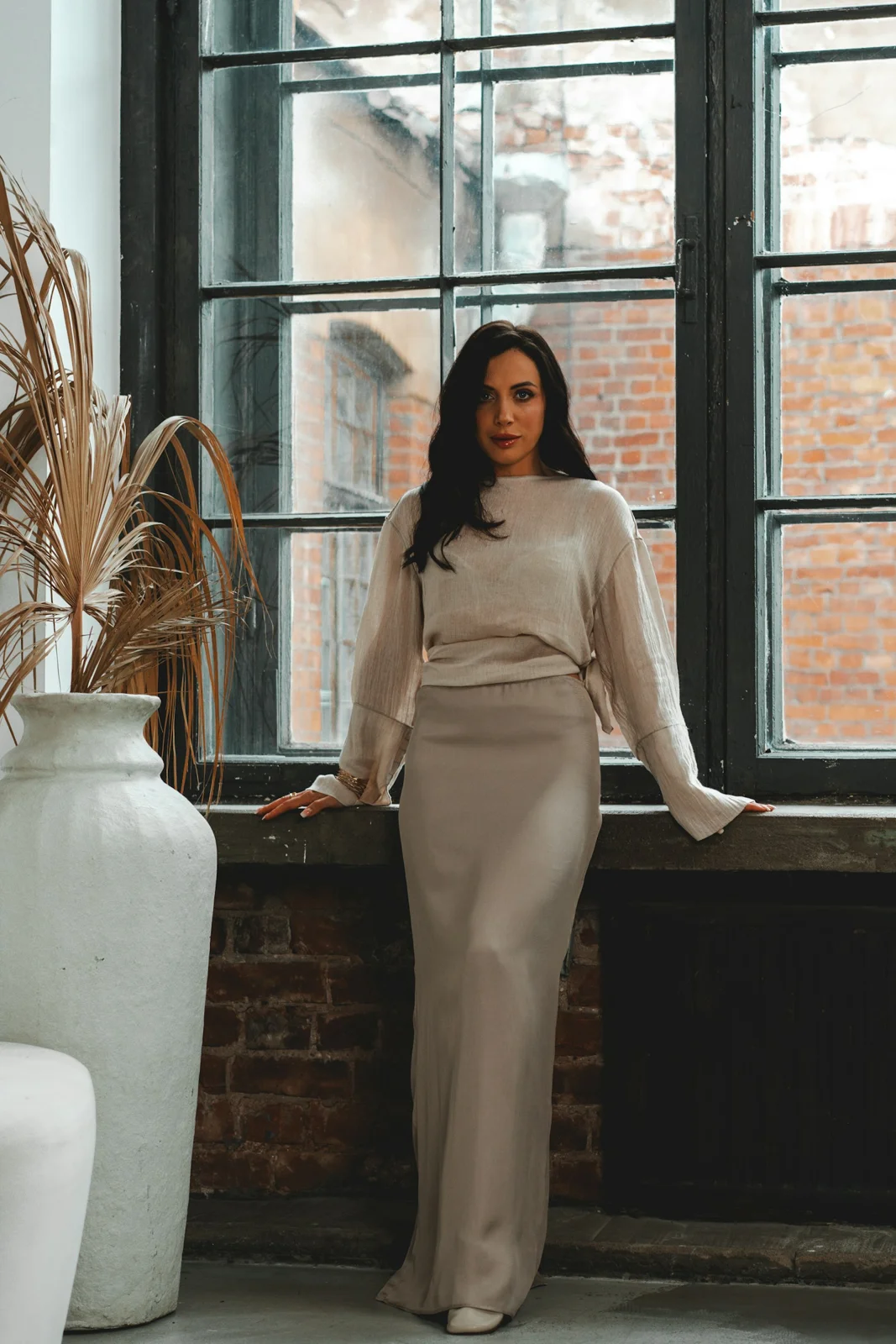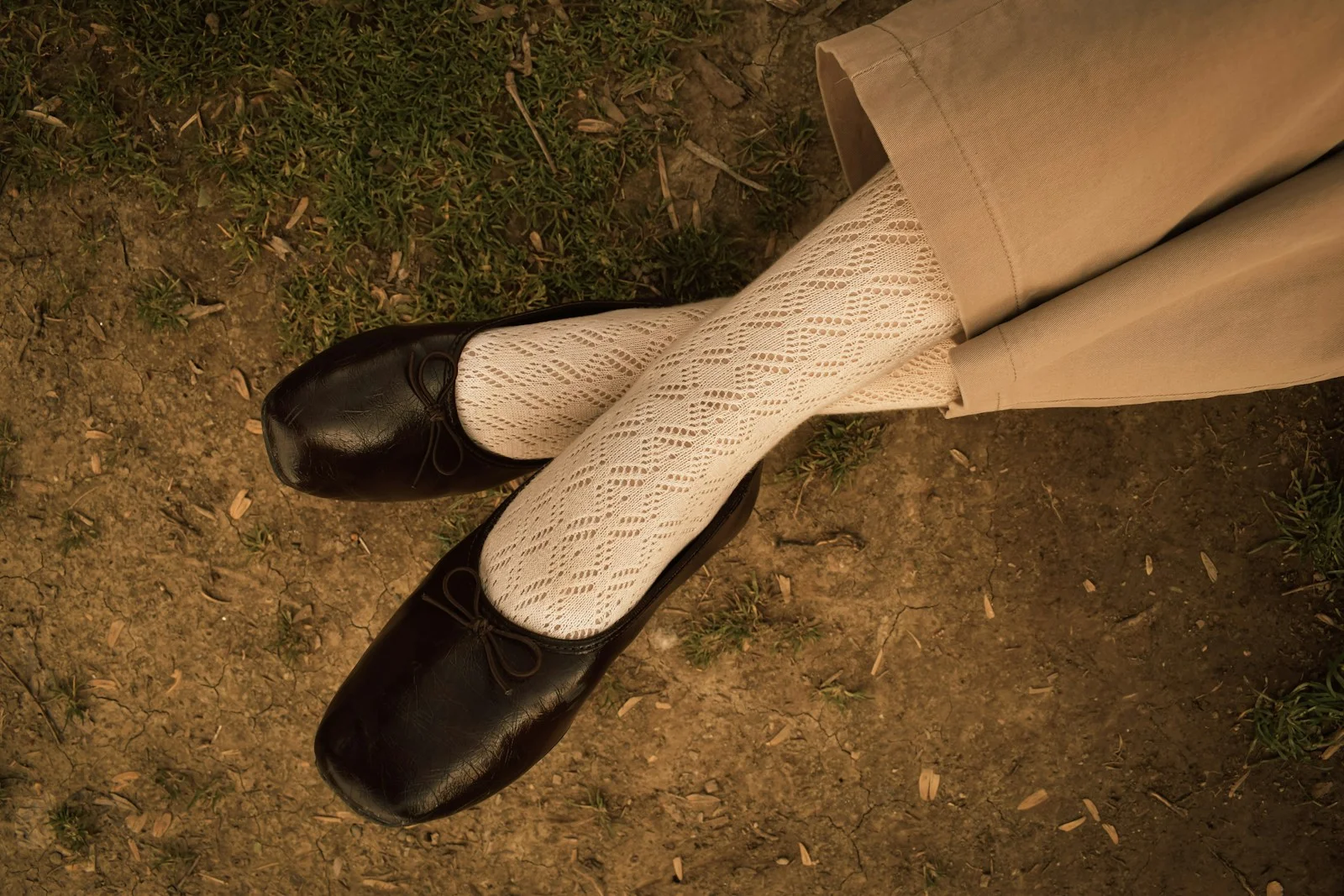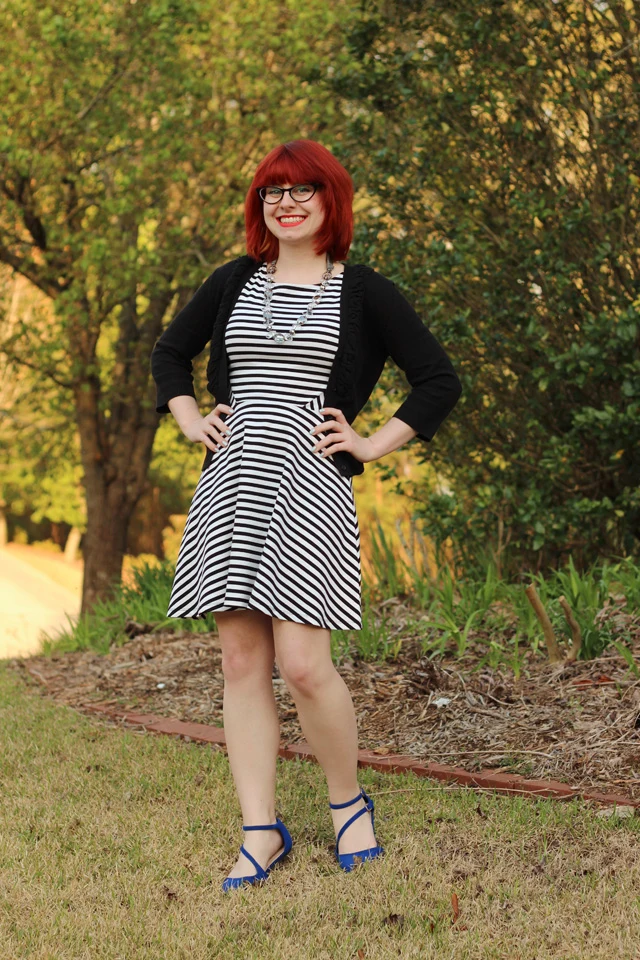
Imagine a plain top, straight trousers and familiar shoes waiting for a weekend outing. The base already works for the occasion. What it lacks, if anything, is the character you want from an outer layer. A loosely draped piece and a crisp overshirt offer different visual relationships over that same base. Neither makes the weekend more authentic or the wearer more relaxed; the question is which arrangement you would enjoy wearing.
The draped version keeps the outline less settled
For the first original composition, imagine an open layer whose front edges fall into uneven folds. Some of the plain top remains visible between them. Rather than drawing a firm rectangle around the base, the layer interrupts it with a less regular outline. I would choose this version when the appeal lies in that unfinished-looking movement of edges, not in a perfectly placed front.
This is a visual proposal, not a report of handling a garment. The imagined drape does not identify a fiber, a grain direction, stretch or softness against skin. A photograph showing a falling fold would not answer all those questions either. If the loose appearance is the reason for considering a purchase, the actual garment still needs to provide the desired shape in a way you want to manage.
The overshirt gives the base an outer boundary
For the second composition, keep the top, trousers and shoes fixed and imagine an overshirt with a clearly defined collar, straight front edges and a more definite lower edge. Worn open in this invented scene, it creates a visible frame around the plain top. I read that arrangement as more deliberate at its boundaries, even though the clothes underneath have not changed.
That preference need not be translated into a claim that the wearer is more organized or dressed for a more important day. Crisp and draped describe the proposed appearance here, not a hierarchy of good behavior. The overshirt might appeal because its outline is exactly what you want; it need not justify itself as a correction to the looser option.
Give each option its own buying question
For the draped direction, the useful question is whether the actual front and overall volume create the loose relationship you like with your own base clothes. It is not enough that a product is described as soft. You would also want to know whether managing the open edges suits your activities and whether its actual care requirements fit your plans. No construction or care property can be supplied by this hypothetical outfit.
For the overshirt direction, the buying question centers on its particular frame: the collar, front edges and hem in relation to the top and trousers. A product category cannot supply those proportions. Keep its actual measurements, construction and permitted use attached to the specific garment. The visual idea does not establish weather protection or authorize a way of altering the piece.
Choose the mood without buying a second wardrobe
Getty’s formal-analysis material distinguishes straight and curved lines as part of describing visual arrangements. That vocabulary helps name the difference here without borrowing a performance claim. The loosely falling edge and the definite outer frame are two ways to organize the same base, not two complete lifestyles that require separate collections.
You may already own something that gives you one of these relationships. You may also decide that the base needs no layer at all for the actual setting. If you do shop, let the desired relationship explain the purchase in a sentence: a less regular outer outline, or a more definite frame. That is a clearer purpose than hoping the word weekend will tell you what a garment should feel like.
Sources & further reading
Published sources for the details and examples discussed in this story.