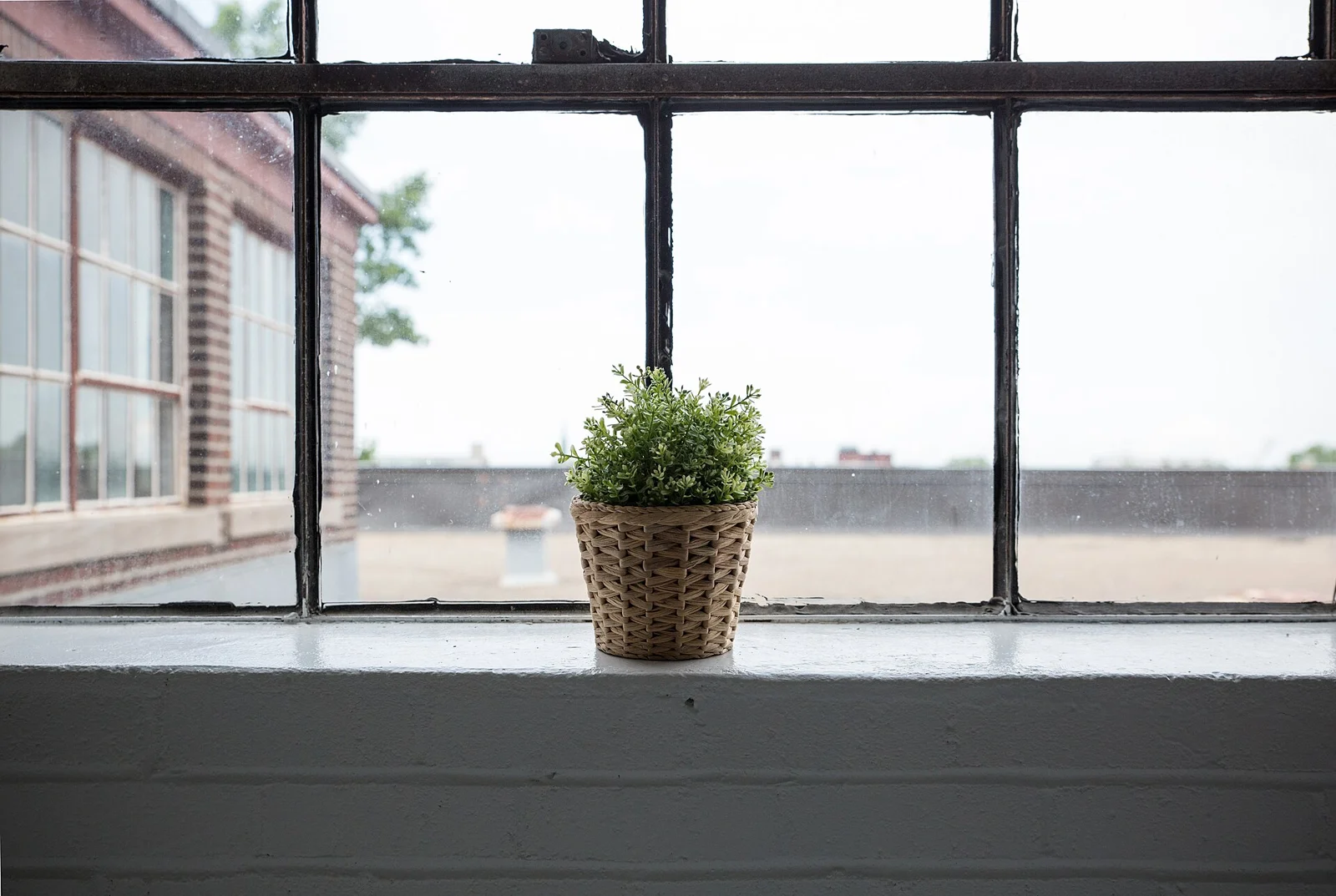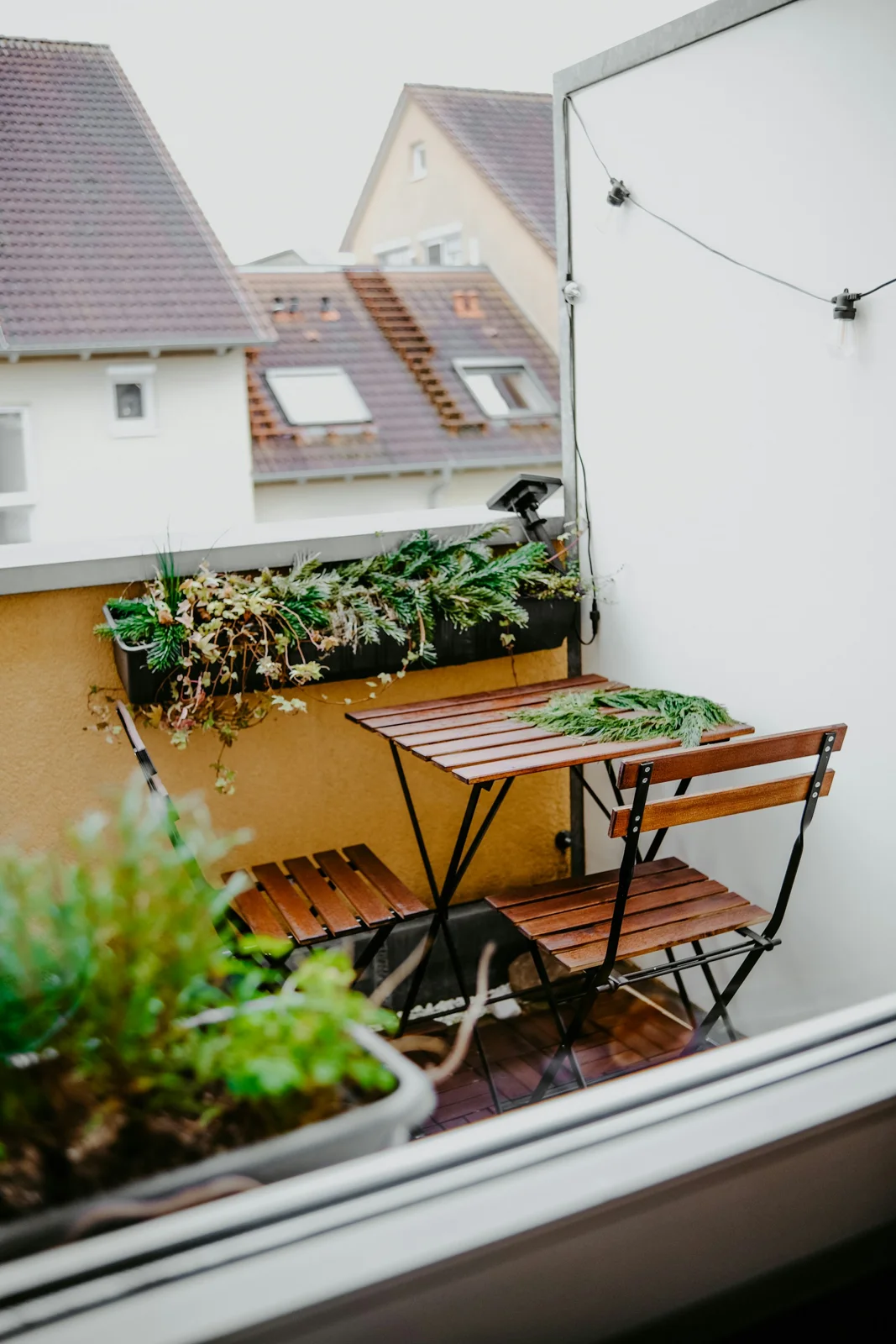
A small balcony table should leave room to enjoy the balcony. Begin with the chair pulled out, the door open and the route you need to keep clear. A table that fits in a plan view may still make the space awkward once someone sits down with a cup.
Measure the movement, not only the floor
Mark the proposed tabletop and legs in a way suitable for the surface. Add the actual chair and try sitting, standing and opening the door. Check that the arrangement does not obstruct an essential route or building feature. Follow the property's rules and ask the responsible person about any uncertainty before installing or attaching something.
A wall-mounted or rail-mounted table is not automatically an option. The support, fixing method, building requirements and intended product use all need to be established. Do not infer structural suitability or permitted loading from the fact that a product is sold as compact balcony furniture. When those questions are unresolved, choose an appropriate freestanding alternative or wait for proper advice.
Choose the meal you want to have
A coffee cup and a book ask less space than two complete place settings. Decide which use happens often enough to guide the purchase. Try the actual dishes on a similar-sized surface if possible. A tabletop that technically holds two plates may leave nowhere comfortable for a jug, hands or the small things that appear during a meal.
If eating outside is occasional, a modest side table may serve daily use more naturally than a dining set that fills the balcony. A folding design can be useful, but it needs a place to go when folded. Include that storage space in the decision rather than treating the word folding as proof that the furniture disappears.
Read the material's care, then choose
IKEA's outdoor-furniture maintenance guidance illustrates how care depends on material and product. Check the exact maker's instructions for the table you are considering, including cleaning, weather exposure and storage. Do not assume that every wooden, metal or woven-looking table behaves the same way outdoors.
Consider how the table will be managed in unsuitable weather and whether the design can be stored safely as instructed. A cover may be useful for some products, but it has its own fit and ventilation requirements. Buy the maintenance arrangement only after understanding the furniture, not as a universal fix for an item that does not suit the location.
Leave the rest of the balcony quiet
Use a small number of accessories that have a clear role. A suitable cushion, a plant chosen for the conditions or a modest serving tray may be enough. Keep pots and other items stable and appropriately supported, and follow building guidance. Do not use decorative objects to fill every remaining strip of floor.
Try the table through several ordinary uses before adding another seat or storage unit. Notice where you naturally put a book or cup and whether you still move comfortably. The successful purchase may make the balcony look less furnished than the inspiration photograph, but more useful for the real morning or evening you want to spend there.
Sources & further reading
Published sources for the details and examples discussed in this story.