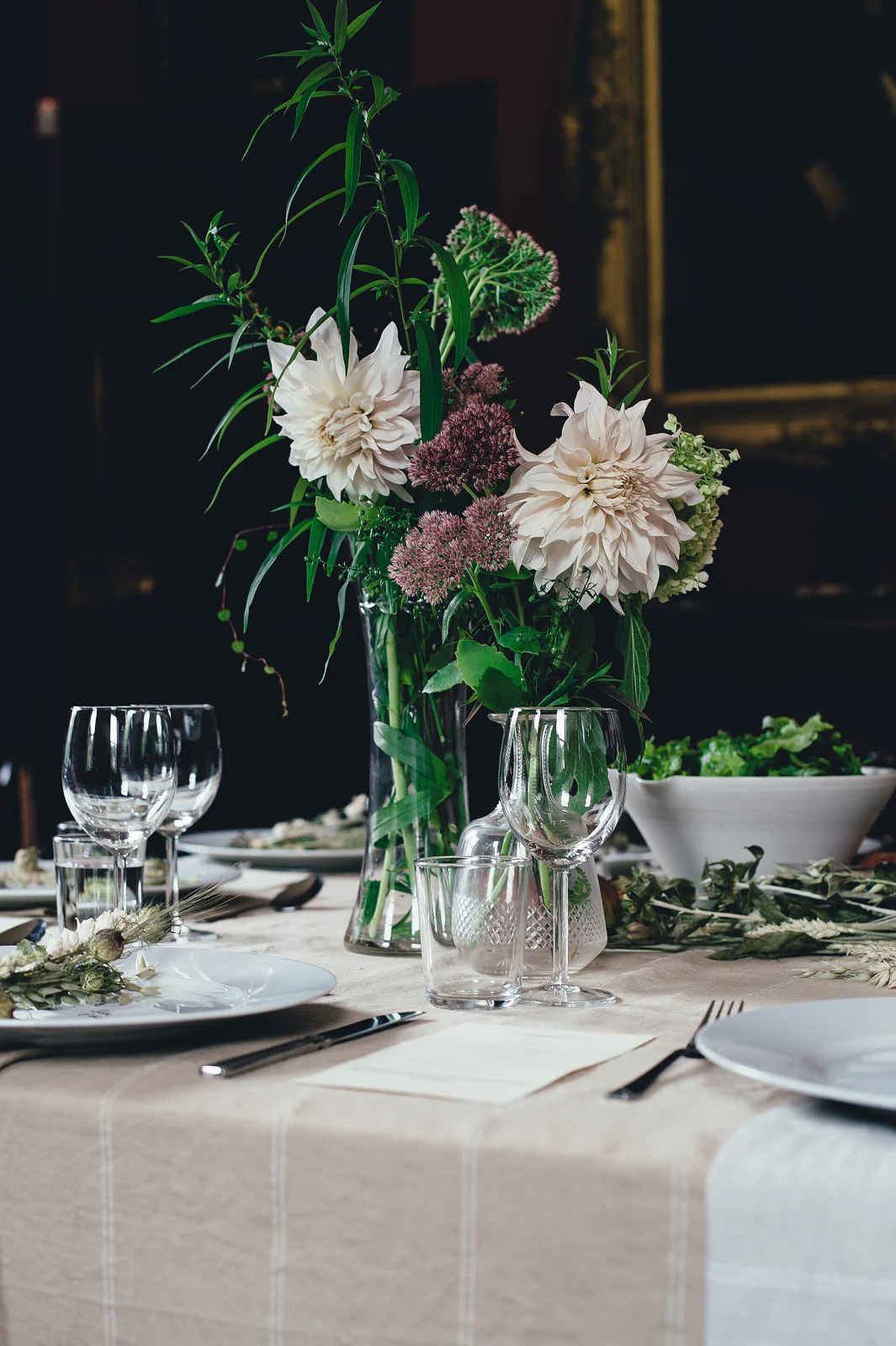
Linen on an everyday table should be easy enough to use on an ordinary Tuesday. A cloth that needs a special mood before it can leave the cupboard may belong to a different kind of purchase. Begin with the table's dimensions, the meals you eat there and the care routine you are willing to keep.
Decide what needs covering
A full cloth changes the whole surface; a runner or a few placemats leaves more of the table visible. Choose the format for the way you eat and serve. If dishes are usually placed in the center, leave practical room for them and use suitable heat protection where needed. A cloth is not automatically a protective layer for every surface or hot dish.
Measure the actual tabletop and check the maker's size guidance. Consider the drop around chairs, knees and anyone who may pull at the fabric. A generous overhang can look lovely and still be inconvenient in a small room. Try a temporary layout with a cloth you own before ordering a larger size on the strength of a styled photograph.
Choose the look you will allow to change
Decide whether you enjoy a relaxed, creased appearance or prefer a smoother finish. That preference affects the work after washing. Do not buy a texture because it looks effortless in an image if your own eye will insist on ironing it every time. Neither approach is more correct; they simply ask different things of the week.
Compare the actual fabric information, construction and care instructions. Linen is not a promise that every product will shrink, soften, stain or last in the same way. Ask the seller about the exact item when a characteristic matters. A sample or an opportunity to feel the fabric can supply more useful information than a general claim about natural materials.
Keep the table's care visible
Use cleaning methods appropriate to the fabric and the surface underneath. CDC's home-cleaning guidance emphasizes choosing products suitable for the surface; it does not make one household cleaner appropriate for every cloth or finish. Follow the textile maker's stain and washing instructions, and avoid trying an aggressive shortcut on a favorite piece.
Consider how quickly the cloth can return to use after laundering. If drying space is limited, a smaller format may fit the routine better than a second full-size cloth. Store only fully dry fabric as directed. A practical spare can be useful, but a stack of extra sets is not a substitute for choosing something whose care suits the household.
Buy a useful first piece
Start with one color or pattern you can use with your existing dishes. Everyday tableware does not need replacing to accommodate a new textile. Try the cloth through several ordinary meals before buying matching napkins, runners and seasonal variations. Notice whether the format helps the table feel welcoming or mainly adds work.
If the cloth spends more time folded away than in use, identify why. The size may be wrong, the care may be inconvenient or the look may feel too formal. Solve that specific issue before buying another version. A small, useful textile collection grows from what reaches the table, not from what coordinates neatly in the cupboard.
Sources & further reading
Published sources for the details and examples discussed in this story.