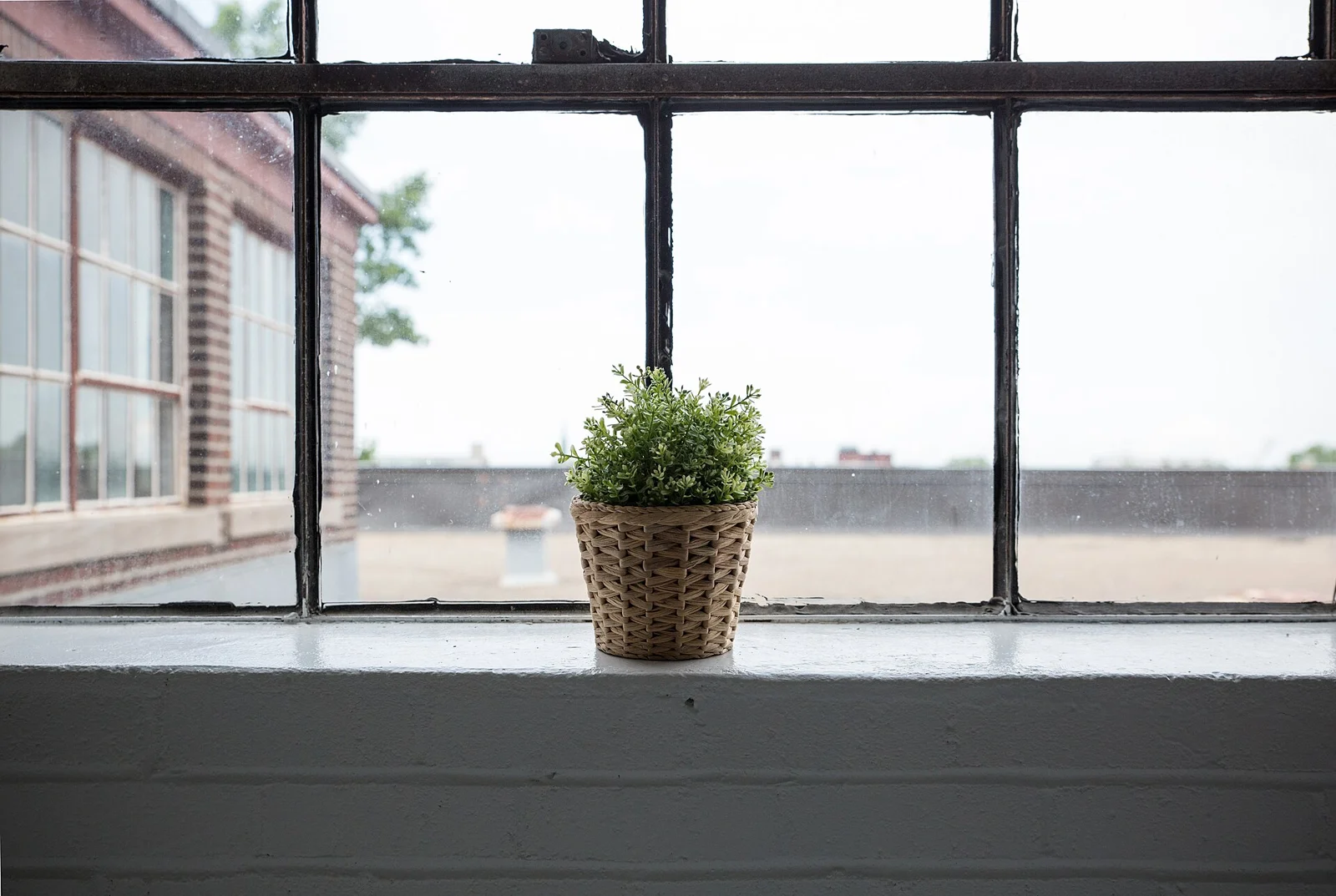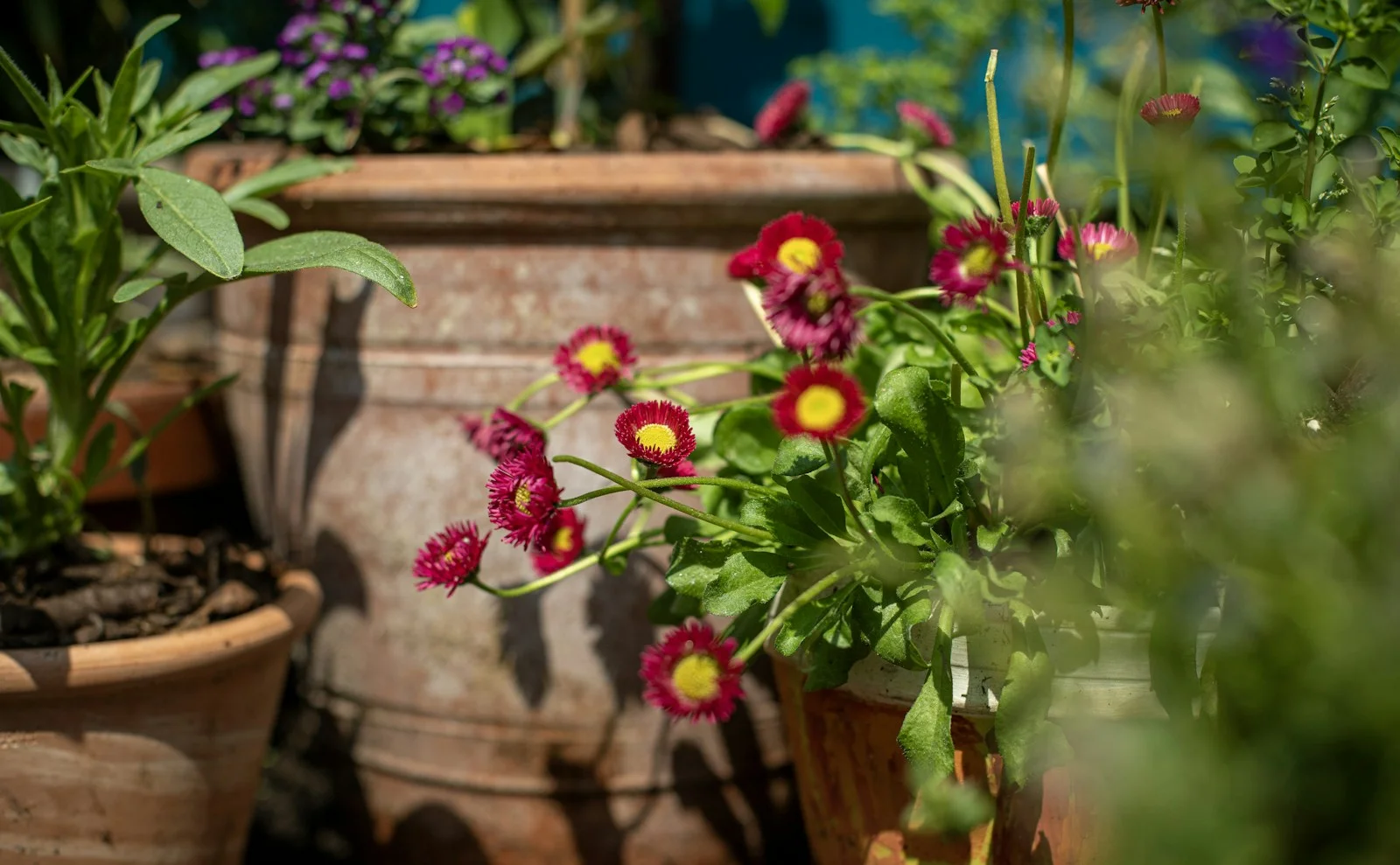
A small outdoor corner can feel like a garden long before it holds a collection of matching pots. One healthy plant, a place to put down a cup and a clear path through the space may be enough to change how the corner is used. Begin by observing the light and your daily routine. The prettiest arrangement is the one you can care for without turning watering into a complicated expedition.
Watch the corner before choosing the plants
Notice when direct sun reaches the space and what happens after rain. A bright-looking balcony can still be shaded for much of the day, while a sheltered wall may become surprisingly warm. Record what you observe at different times instead of choosing plants from the mood of one photograph.
Use the plant's own care information and local nursery advice to match it to the conditions. A flower that thrives in someone else's garden may be unsuitable for your light or climate. If the space is rented or shared, confirm the rules for containers and keep access routes, doors and drainage outlets clear.
Choose the pot as a working object
Drainage is an essential part of a container, not an optional extra hidden beneath the styling. The Royal Horticultural Society advises using containers with drainage holes and keeping them clear. A decorative outer pot can be useful, but it should not leave the growing pot standing in trapped water.
Think about the filled weight before you bring the pot home. For a balcony or raised surface, seek appropriate guidance about load limits rather than guessing from the container's empty weight. If the pot will need to move, make that decision before filling it with compost and planting it.
Start with a small, coherent group
Two or three containers can give a corner structure without occupying all the usable floor. Choose a simple relationship between them: a repeated material, a quiet color or a change in height. Leave room to reach each pot for watering and to remove fallen leaves. An arrangement should still work when a chair is pulled out.
The RHS notes that plants in containers generally require more frequent watering and feeding than plants growing in the ground. That is a good reason to begin modestly. Add another pot only when the first group fits comfortably into your routine, especially if summer trips or long workdays make care irregular.
Make the watering route easy
Keep a small watering can somewhere accessible and check the compost and the plant's condition rather than relying on a decorative calendar alone. Weather, pot size and the plant all affect how quickly moisture is used. Follow plant-specific advice and adjust as conditions change.
Before a trip, arrange for someone to care for the plants and explain the routine clearly. A vague request to give everything a splash can be less useful than identifying which pots need checking. Test any self-watering accessory before relying on it. New equipment is not automatically simpler than a small number of manageable containers.
Buy the next useful thing, not the whole look
A sturdy pot, suitable compost and a plant matched to the corner are a more useful beginning than a collection of decorative accessories. Inspect plant labels and ask about mature size, seasonal care and whether the chosen variety suits container growing. Keep the label so its name and care instructions are not lost.
Photograph the corner after a few weeks, then look for practical improvements: perhaps one plant needs a different position or a pot blocks the chair. Let that observation guide the next change. A small garden becomes personal through these quiet adjustments, not by being finished in a single shopping trip.
Sources & further reading
Published sources for the details and examples discussed in this story.