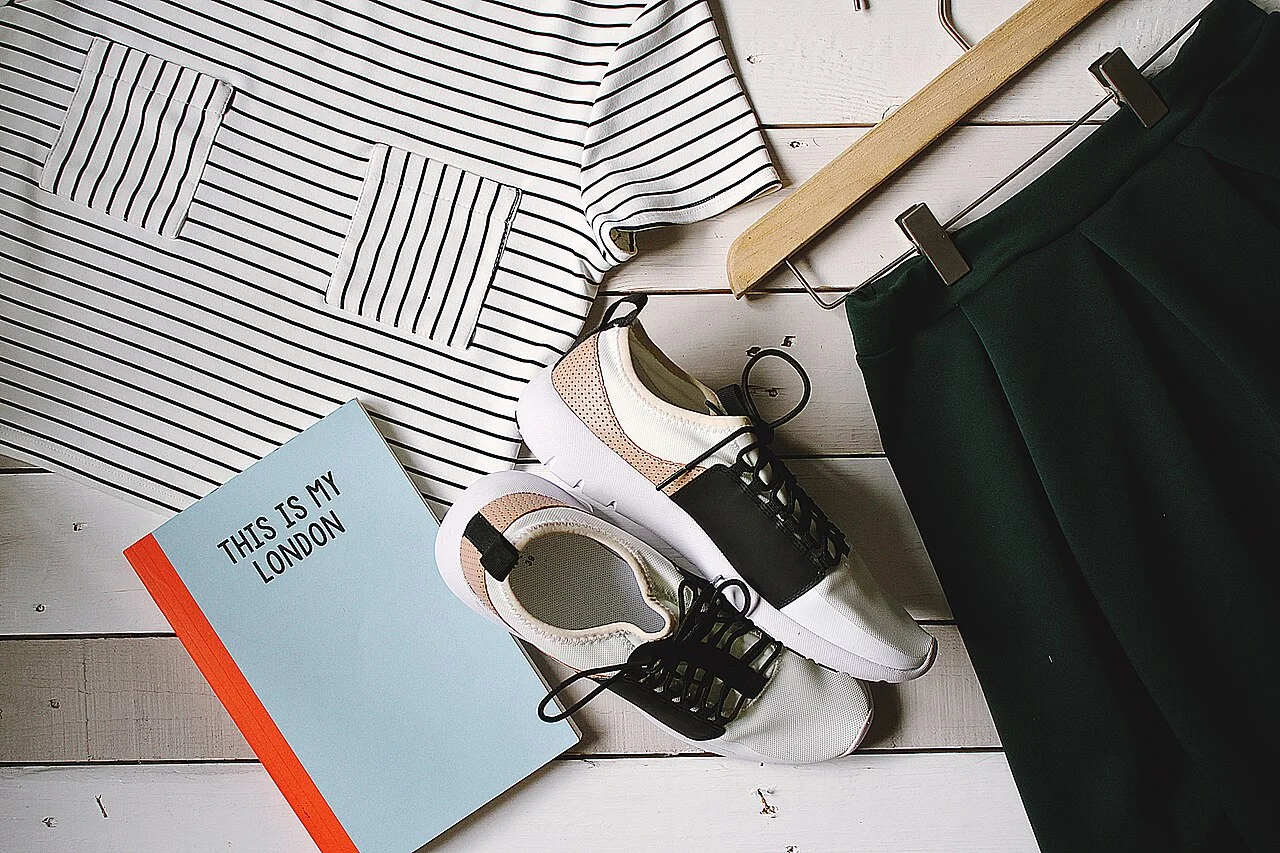
A simple outfit does not need another purchase to give the eye a different route through it. Sometimes the change is a sleeve edge or the point where the top meets the trousers. The reference here is a documented photograph titled Outfit: a light top with dark stripes and contrasting pocket directions, dark trousers and light trainers arranged on a wooden surface. The following styling alternatives are imagined, not photographs of the garments being worn.
Keep the starting clothes fixed
The actual photograph already contains several clear lines. Narrow dark stripes run across much of the top; the pocket stripes turn in a different direction. The visible short-sleeve edge forms another boundary. Beside that patterned area, the trousers appear as a much quieter dark shape. To my eye, the contrast between busy and quiet areas is the most useful starting relationship.
Nothing in this reading identifies the fibre content, maker, size or fit. Nor does the flat lay show how the garments sit together on a person. Keeping those limits clear allows a specific visual discussion without borrowing a model's experience that the image does not contain. The clothes remain the same throughout the imagined alternatives; this is not a shopping list disguised as styling.
A sleeve edge can be quiet or emphatic
Imagine leaving the visible sleeve edge as a simple ending to the striped surface. Then imagine a small turn-up, if the actual garment permits it. The fold would introduce a more deliberate band at that location. Whether it also creates a colour contrast depends on the unseen inside of the fabric, so the photograph cannot establish that part of the effect.
The aesthetic choice is between letting the pattern continue toward a relatively unobtrusive edge and giving that edge an extra stop. I would describe the latter as more emphatic, not more flattering. It does not establish a change in arm length or body proportions. If the sleeve resists the fold or the garment's construction makes it unsuitable, there is no reason to force a visual idea into a physical alteration.
The hem decides where two visual areas meet
Consider an untucked top and, separately, a possible front tuck. The first would let the top's lower outline remain part of the composition; the second would move some of that meeting point toward the trouser waist. These are proposed arrangements, not observed fits. The image cannot tell us the resulting volume, whether the pockets remain clear or whether either option feels comfortable.
For a quieter appearance, you might prefer one continuous edge. For a less regular one, you might prefer a partial break. Neither requires a claim about correcting a body type. The neckline is outside the useful evidence of this photograph, so an open-collar analysis would require another documented example rather than an invented buttoned shirt. Here, the sleeve boundary and the top-to-trouser meeting point provide enough to consider without changing the clothes into something else.
Sources & further reading
Published sources for the details and examples discussed in this story.