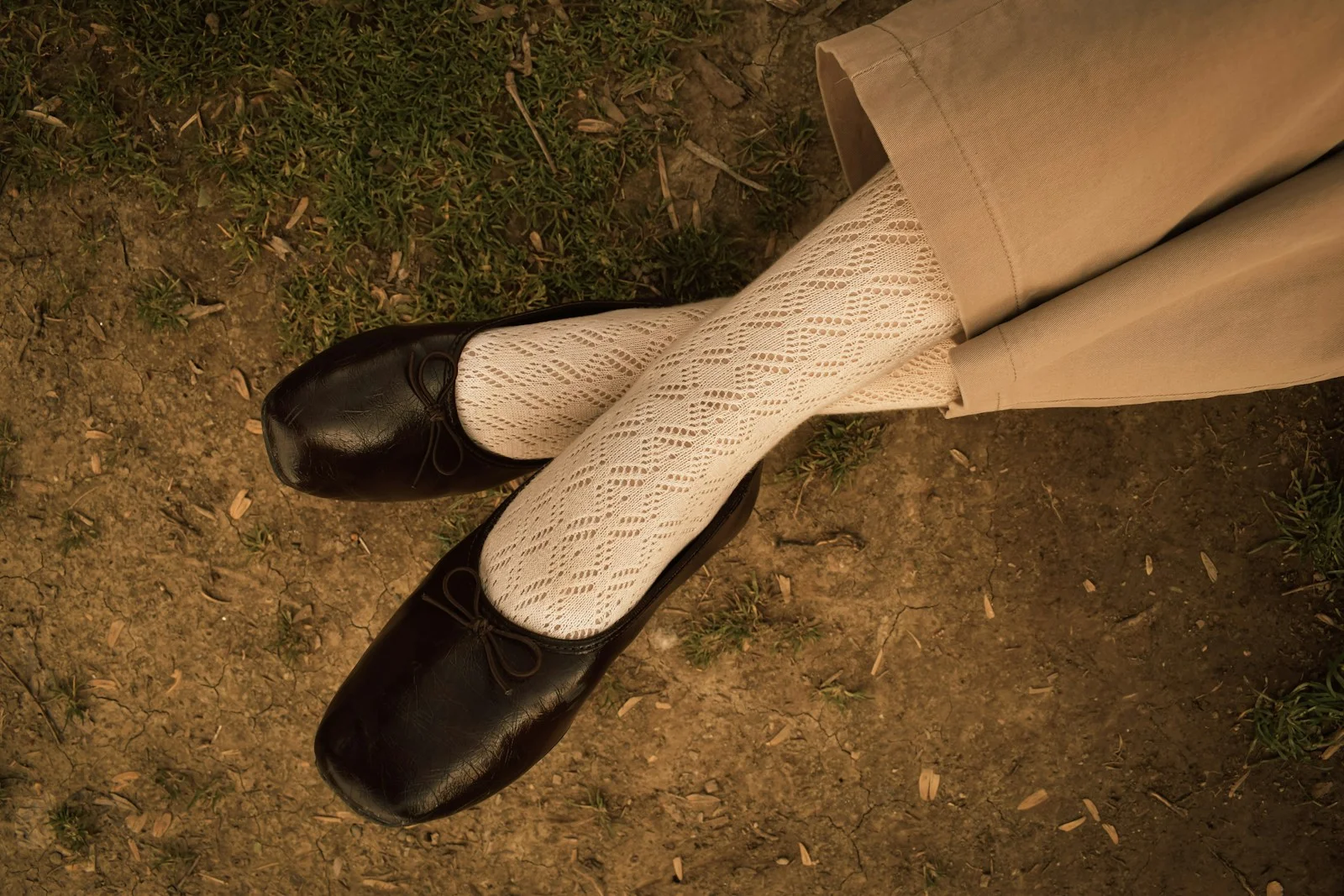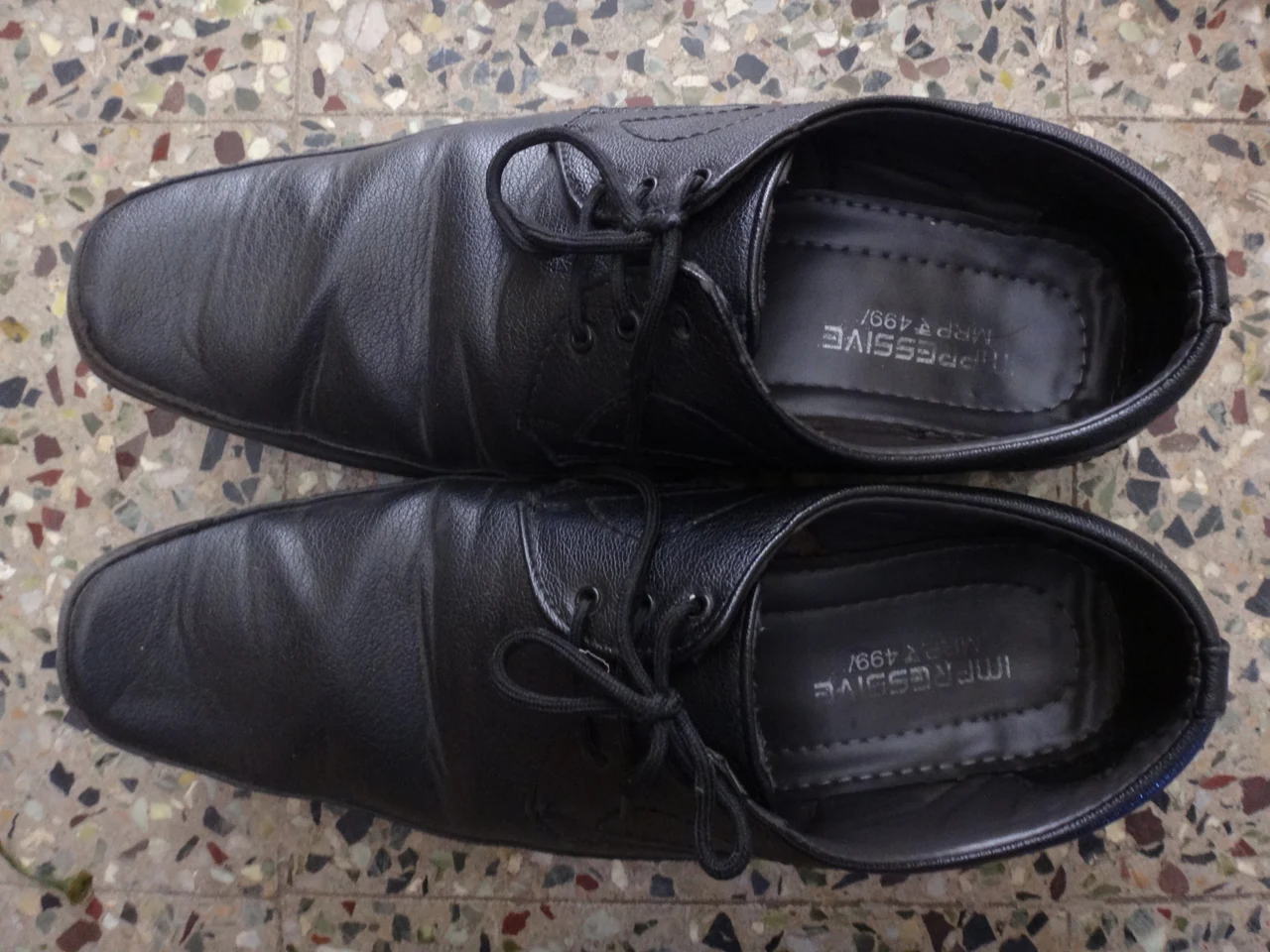
Picture an invented outfit: a pale shirt, dark straight trousers and a simple closed shoe. Leave the shirt, trouser hem and shape of the shoe unchanged. Now imagine the shoe first as a light neutral and then as a dark neutral close to the trousers. The difference is a small but definite styling choice. It concerns where the outfit seems to stop, rather than a claim about changing the wearer’s body.
The light version makes a separate piece
Against the imagined dark trouser leg, the light shoe reads to me as a distinct shape at the bottom. The hem becomes a clear junction between two areas. Because the shirt is also pale, the shoe can feel like a small answering note rather than an unrelated addition. That is my reading of this invented composition, not a rule requiring shoes to match a top.
I would choose this version if I wanted the footwear to remain part of the outfit’s conversation. The contrast gives it a visible role without changing the trouser length or adding an accessory elsewhere. It does not establish that a light shoe is casual, that it suits a particular body, or that an actual pair would be comfortable. Those are separate questions the color arrangement cannot answer.
The dark version lets the trousers finish quietly
In the second version, the shoe is close in darkness to the trousers. To my eye, the lower area becomes more continuous, so the pale shirt has less competition from the bottom of the outfit. The shoe is still present; it simply takes a quieter role in this particular imagined arrangement.
The Getty’s formal-analysis vocabulary uses value to describe how light or dark a color is. That is the variable being changed here. No exact retail shades, calibrated color match or photographic comparison is supplied. The dark shoe’s effect depends on its relationship with the other invented clothes, not on a universal promise that dark footwear always produces the same impression.
Choose the ending before shopping for it
If the clothes already feel complete but the bottom seems too emphatic for your taste, a quieter shoe relationship may be worth considering among suitable pairs you own. If the clothes feel overly continuous and you want the shoe to be more noticeable, the separate light shape offers another direction. These are alternative preferences, not stages from wrong to corrected.
For an actual purchase, keep the shape and intended use in view as well as color. A pair that gives the desired contrast can still be unsuitable for your fit or activities. This feature assesses no real shoe construction or wear performance. You need not buy both versions to validate the idea; the useful result may simply be recognizing which role you prefer from footwear already available to you.
Sources & further reading
Published sources for the details and examples discussed in this story.