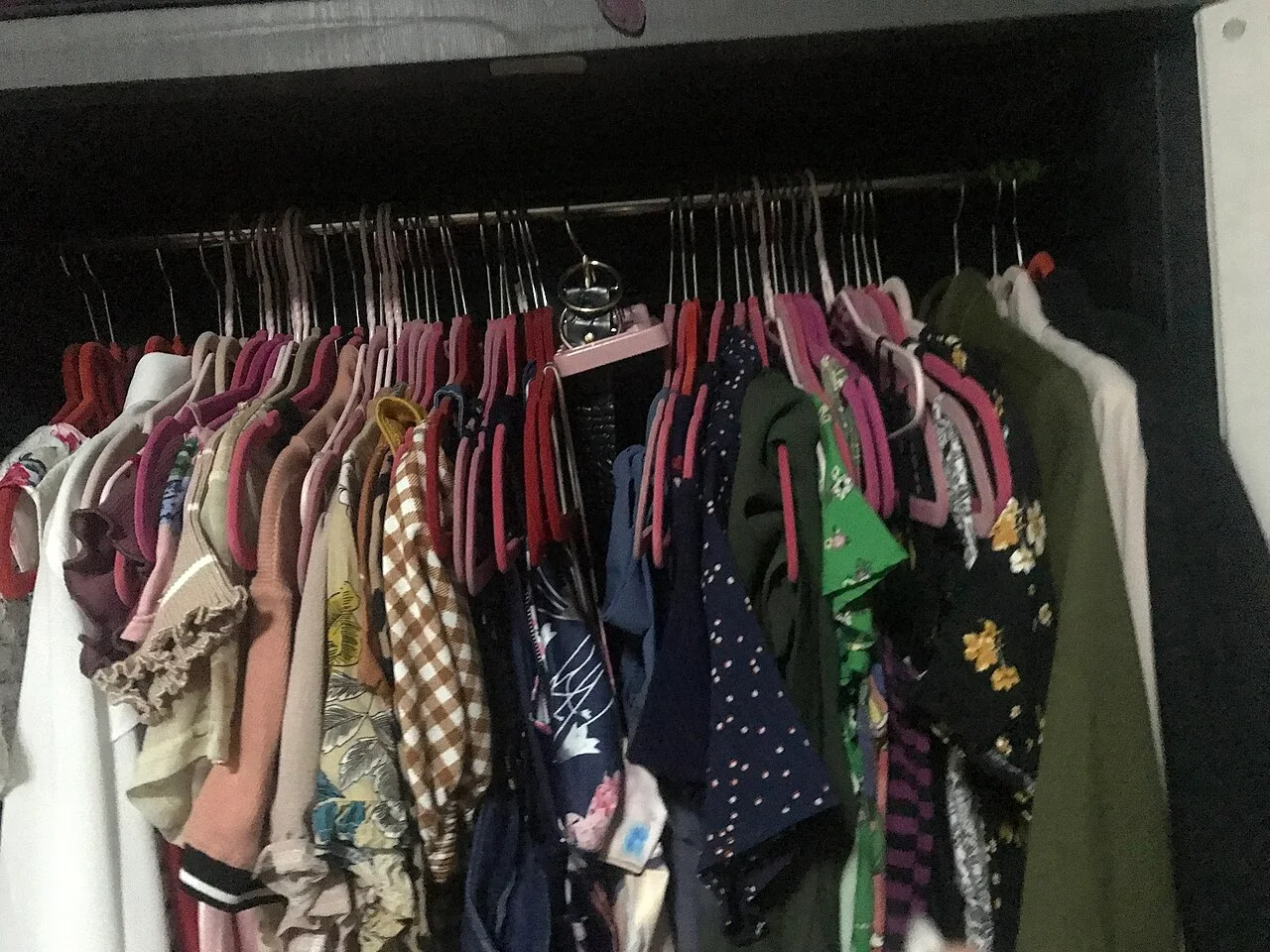
A shared closet is shared infrastructure, not automatic permission to borrow everything inside it. Two people can agree that both need access to the same small space while keeping very different boundaries around their belongings. An effective arrangement begins with those boundaries, before dividing shelves into equal rectangles. The household examples here are hypothetical; they are not product-capacity or tenancy advice.
Three meanings of shared
Consider a closet containing one person's work clothes, the other person's occasional-wear pieces and an umbrella both use. The closet is shared; the work clothes are privately owned; the umbrella is communal by agreement. A borrowed jacket introduces a fourth situation: access for a particular occasion without a change of ownership. Treating all four situations as 'our stuff' makes the practical space problem harder to discuss.
One concise opening is: 'Which items are private, which have we agreed to share, and which require asking each time?' The answer may be different for two visually similar garments. There is no reason to infer permission from where something hangs or how often its owner wears it.
Equal space can mean unequal access
Imagine one person needs a uniform before an early shift while the other has clothes used less often. Identical shelf widths do not necessarily give them comparable access. A useful drawing of the existing closet can show who needs to reach which items and when, rather than pretending a new storage purchase will settle the ownership question.
Try describing zones by responsibility: a private area for each person and a clearly agreed place for the communal umbrella. A temporary borrowed item should remain identifiable as borrowed, rather than drifting into the shared zone. This is a conversational sketch, not a recommendation about how much weight a shelf or rail can bear.
Make borrowing a separate exchange
Permission to use an item can include a simple return expectation without becoming a household lending service. 'Please ask before taking this jacket, and put it back with me rather than returning it to any empty hanger' is different from 'Anything on this side is available.' The first preserves the owner's ability to say no; the second creates a broad permission that may not have been intended.
UCLA Residential Life's roommate guidance specifically discusses boundaries around using another person's belongings and revisiting shared-space agreements. Its campus procedures are not rules for this hypothetical home. They offer a relevant institutional example of treating belongings and shared space as topics for conversation rather than assumptions.
Allow the arrangement to change
A different season, a new work schedule or an item temporarily away for repair can change what accessible storage means. A brief conversation about the zones is more direct than silently expanding into the other person's area. There may be no perfectly equal arrangement, especially in a small space, but the compromises can be named.
The outcome is a modest agreement: what remains private, what is genuinely shared, how borrowing begins and where each person needs ordinary access. It does not require a wardrobe limit or a judgment about whether either person owns too much. The shared closet can work as a negotiated place while the possessions inside it keep their separate stories.
Sources & further reading
Published sources for the details and examples discussed in this story.