A pause on a city visit can mean stepping closer to a small detail, or stepping back enough to take in a large interior. Those are different pleasures. Two documented spaces at The Met offer a way to name them: the cloister herb garden at The Met Cloisters and the Great Hall at Fifth Avenue. They are at separate New York locations, not neighboring rooms in one building. This comparison uses a published courtyard image and institutional architectural descriptions; it is not a report of visits or a weather-tested plan.
The cloister: a sequence of nearer relationships
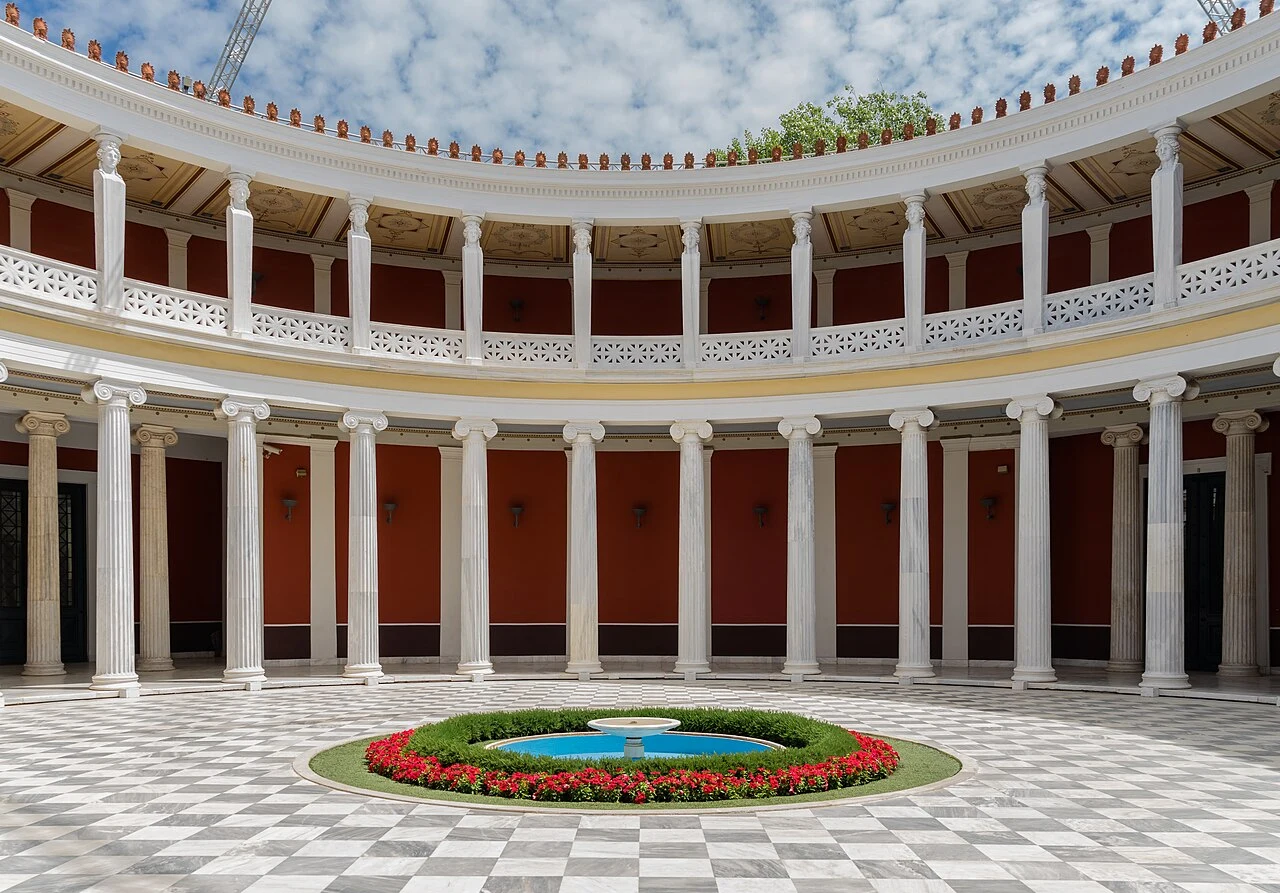
The Met describes the reconstructed cloister's L-shaped arcade, with slender columns and double capitals, screening the herb garden. It also explains that the garden approximates a medieval layout rather than copying one specific original. In the published image, pointed arches repeat above the column pairs, while brick-edged planting beds and paths occupy the foreground. Open sky remains part of the view.
What draws me is the possibility of changing attention over a short visual distance: the outline of a column, the edge of a bed, the passage beyond. I read this as a more intimate sequence of relationships than a single overwhelming interior. That is my response to this source image, not proof that the place is physically small, uncrowded or available for an undisturbed rest.
The hall: a larger structure overhead
The museum's dated 2010 Great Hall account describes three immense saucer-shaped domes, eight arches rising from masonry piers and colonnades connecting with the galleries. Those are the published architectural features informing this comparison. We have not treated that older press account's visitor numbers or flower arrangements as a current operational report, and no new on-site observation is claimed here.
I imagine a different kind of pause under those larger repeated forms: attention moves upward toward the enclosing structure rather than between plant beds and slender supports. A monumental entrance can be interesting precisely because it does not feel like a private retreat. The imagined appeal is participation in the museum's large public threshold, not a guarantee of silence or a seat.
Choose what the pause should let you notice
Suppose a fictional visitor has spent the morning looking at large urban facades and wants a change of scale. The garden's nearer repeated elements would interest me as a direction to investigate for that person's appropriate visit. Another invented visitor wants an architectural encounter that remains part of the city's public activity. For that preference, the Great Hall's large interior is the more compelling idea.
Neither person has been assigned a tested emotional response. Courtyard does not automatically mean peaceful, and grand hall does not automatically mean tiring. The difference is the relationship they want to inspect: a sequence of details around a planted enclosure, or the larger structure above an entrance space. That makes the preference more concrete than simply choosing indoors over outdoors.
Weather and entry remain actual planning questions
A courtyard photograph taken under blue sky cannot establish shelter in rain. A monumental hall description cannot establish where a visitor may wait or sit today. Read the actual current museum information for the location you intend to visit, including relevant access arrangements, before making a ticket or journey depend on this comparison. The two branches should not be treated as a quick change of room.
If the desired pause is mainly an opportunity to study close spatial details, I would pursue the cloister idea first. If the purpose is to experience a large ceremonial interior, I would investigate the hall. Buy the visit that supports the actual location and conditions you need, while letting the architectural preference stay a reason for interest rather than a promise about how the day will feel.
Sources & further reading
Published sources for the details and examples discussed in this story.