A decorative pot can look generous around the middle while narrowing at its opening. That shape deserves attention when a plant is intended to stay for a long time. The Royal Horticultural Society advises avoiding urn-shaped pots for long-term plantings because a rootball can be difficult to remove when the container is wider in the center than at the top. The future exit is a separate buying question from whether the pot's color suits the corner.
| Original imagined outline | Question retained |
|---|---|
| A: wider belly beneath a narrower neck | Could the opening complicate future rootball removal? |
| B: no inward narrowing above widest internal body | Is it otherwise suitable for the actual plant and setting? |
| Either proposed pot | Check drainage separately from opening shape |
Compare the mouth with the middle
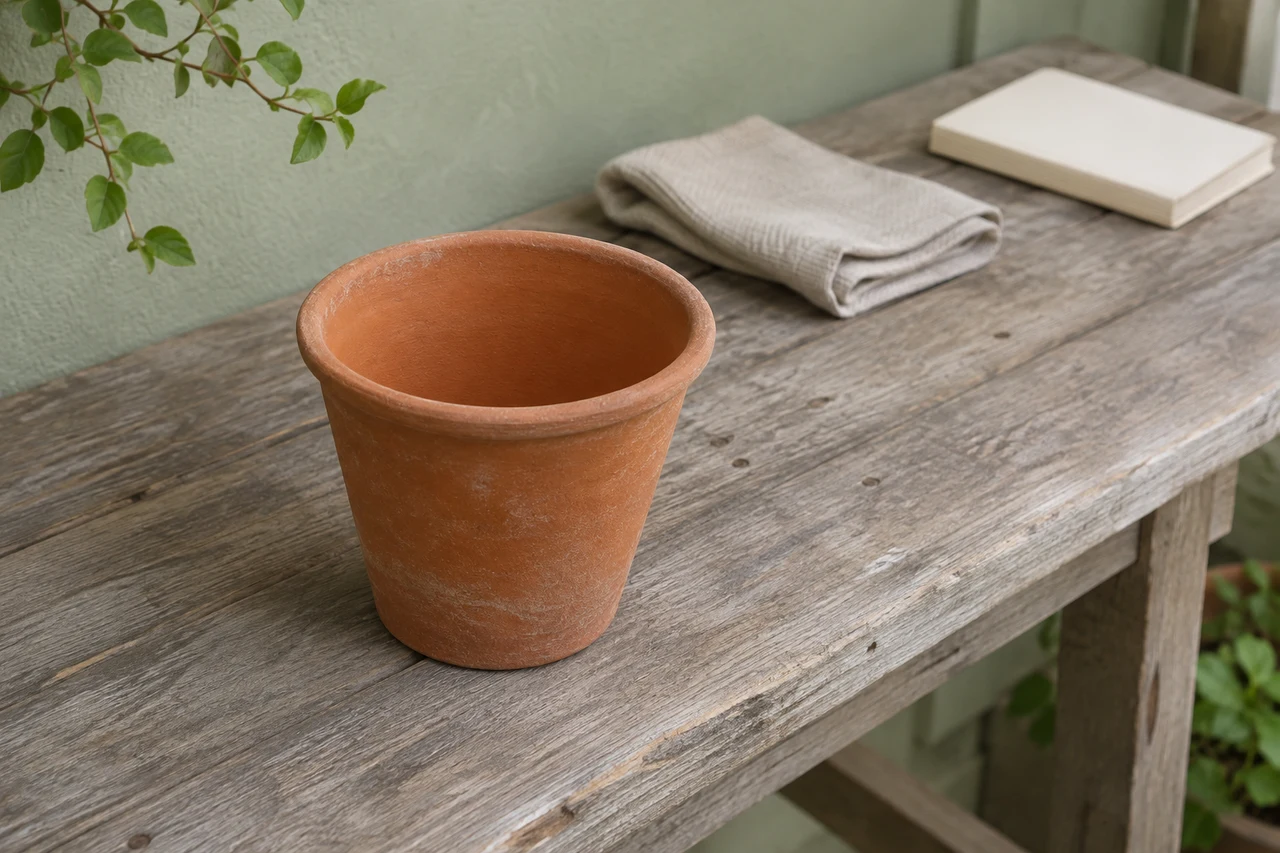
Imagine two original vessel outlines for the same proposed long-term planting. Pot A has a rounded belly and a noticeably narrower neck. Pot B has an opening that does not narrow inward over its widest internal body. Neither is a real product selected or tested here. The comparison isolates the shape at the opening rather than assigning either pot a brand, price or guaranteed planting result.
The useful question is where a developed rootball would have to pass when it is eventually removed. RHS describes the rootball as the roots and accompanying soil lifted from a container or the ground. A roomy middle therefore does not answer every handling question if the exit above it is narrower. The exterior silhouette alone may also conceal the exact internal opening.
Do not confuse an exit question with a drainage answer
Drainage still needs its own check. RHS identifies drainage holes as essential for a growing container. A pot can have a hole in its base while retaining the narrow-neck shape in the imagined comparison. Confirming one feature does not settle the other. Keep the opening and the base as separate parts of the buying note.
For an actual plant, follow plant-specific growing guidance and ask a knowledgeable nursery about suitable container shape and size. This feature does not prescribe a repotting schedule, root cutting, a removal tool or a way to break a pot. If an existing planting is already difficult to remove, seek appropriate advice rather than turn a shopping comparison into an improvised extraction procedure.
Keep the attractive vessel in the right role
A narrowed decorative shape may still be something you enjoy looking at. The decision is whether it belongs in this particular long-term planting plan. Before buying, establish how the exact container is intended to be used and how the plant's care and eventual handling will work. No general claim is made that every urn, decorative outer vessel or plant requires the same arrangement.
In the original two-pot comparison, B deserves investigation first because it avoids the specific inward neck under discussion. That preference does not verify its drainage, dimensions, weather suitability or stability. Ask for the missing information before ordering. A pot purchase can preserve the pleasure of a shape while recognizing that the plant will eventually need something beyond a pleasing photograph on the day it arrives.
Sources & further reading
Published sources for the details and examples discussed in this story.