Two numbers can both be correct and still describe different things. A clothing page might show a range for the person who will wear an item beside a single measurement taken across the finished garment. Reading them as interchangeable can create a size puzzle that no amount of arithmetic fixes. Before selecting a size, make a short key to the chart: whose measurement is this, in which units, and taken between which points? The immediate output is an understandable chart, not a prediction that a particular size will fit.
Name the chart before reading the row
Look for the chart heading, tab name and explanatory note. A body-size chart describes the wearer; a finished-product chart describes the item. UNIQLO’s US measuring guide explicitly distinguishes body measurements from finished-product measurements and notes that product dimensions vary with design. Those are separate kinds of information, even when both appear beside the same letter size.
Keep the exact product, regional website and selected version in your note. Do not move a number from a different country’s product page into the current table simply because the item name looks familiar. If a chart has no definition, leave its type unresolved and ask the maker rather than deciding from the size of the number.
Keep a range separate from a garment dimension
Imagine a purely hypothetical chart headed body chest, with a range of 90–96 cm. That row describes a body-measurement range in this invented example. It does not say the garment measures 90–96 cm, and it cannot be compared directly with a field called garment width. Copy the full field name along with the number; chest alone may not tell you enough.
A finished dimension is not automatically a recommendation for the wearer’s body. Do not subtract a standard allowance or assume that every design adds the same extra room. The question here is what the seller has measured. Whether that design suits someone is a later question that the arithmetic does not settle.
Read across versus around from the diagram
UNIQLO India’s explanation says its product guide shows width rather than circumference, while its body-measurement information refers to the person. That is a useful example of why the maker’s definition matters. It is not permission to treat every brand’s chest, waist or width field the same way. Open the measuring diagram associated with the actual product category.
For another explicitly hypothetical example, suppose a maker defines a field as one straight, flat width across a simple garment. A 50 cm width could correspond to roughly 100 cm around only where that maker’s method makes doubling appropriate. This is an illustration of two different quantities, not a real product specification, a body measurement or a size recommendation. Do not double a length, shoulder span or an already stated circumference.
Keep the unit attached to every number
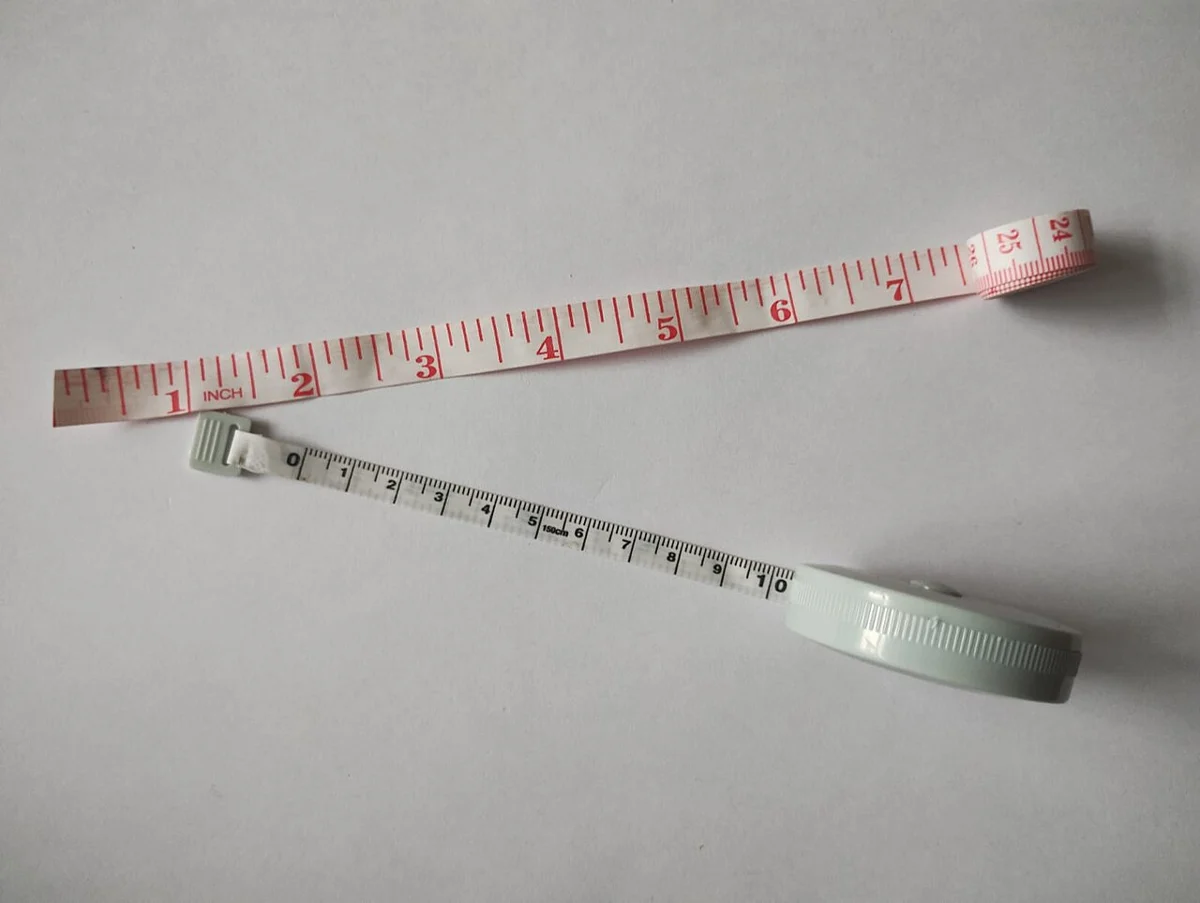
Write cm or inches beside each copied figure, including figures in a message to customer service. Check the website’s unit control and the unit printed on a measuring tape. An unchanged-looking row after moving between screenshots may have a different unit or refer to a different field. Avoid combining a body figure in one unit with a garment figure in another.
If the page supplies its own unit toggle, record which view you used. A conversion changes units; it does not turn a body range into a product dimension or explain an unknown measuring point. Resolve those meanings first. Extra decimal places cannot make an undefined field more useful.
Ask one answerable question about the missing definition
A useful enquiry includes the product code, region, chart heading, field name and unit. For example: “On this product page, does the 50 cm field represent a flat width or a full circumference, and which diagram defines its endpoints?” The number in that question is hypothetical. Do not send a vague request to confirm whether medium is normal when the problem is what medium’s table describes.
Save a small chart key
Keep five fields: product and region; body or finished-product chart; exact measurement name; unit; maker’s method or unresolved question. Link the relevant diagram rather than saving an isolated cropped row. Stop when a necessary definition is missing. A clear chart key lets you return to the page without repeating the same interpretation error, while leaving comfort, appearance and any eventual size choice as separate decisions.
Sources & further reading
Published sources for the details and examples discussed in this story.