Choosing a bunch and caring for it are different parts of bringing flowers home. Once the vase is on the table, its practical routine is less about adding stems than keeping the vessel and water attended to. RHS guidance gives a useful sequence for ordinary cut-flower care. Start with the actual flowers' requirements, since one general routine cannot promise the same vase life for every species, bunch or household.
Begin with a vessel you can clean
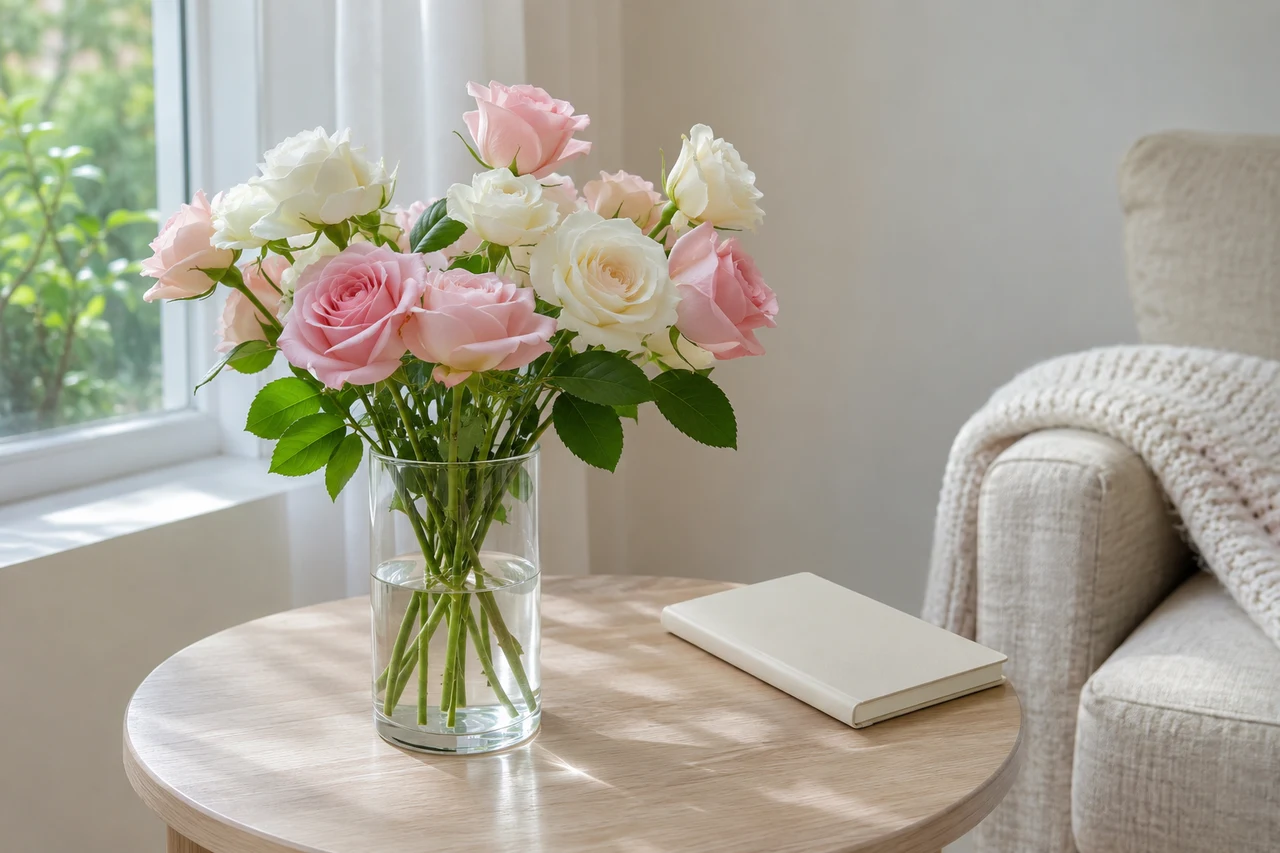
RHS advises using a clean vase and washing a dirty one thoroughly with detergent and a bottle brush. Choose a suitable existing vessel whose inside can be reached, rinsed and checked. A narrow neck may be part of the look you like, but consider how you will actually maintain it before buying another decorative shape.
For an original one-vase household note, record the flower identity where known, any supplier care directions and whether the vessel can be cleaned properly. This note is a suggested organizer, not an arrangement we maintained or a longevity trial. Establish the actual stems' household suitability separately; appearance does not establish safety around pets or children.
Prepare stems without inventing a treatment
RHS says foliage below the water level should be removed and recommends re-cutting stems with a clean angled cut, avoiding crushed or jagged ends. Use appropriate cutting tools carefully.
Keep species-specific requirements with the actual flowers. This article does not reproduce the guide's special hot-water, hollow-stem or other treatments as a universal method. It gives no instruction to hammer stems or mix household chemicals. If the bunch has particular supplier directions or an unfamiliar stem type, resolve that question before improvising.
Put the water check where you will remember it
For vase care, RHS recommends suitable cut-flower food in the water, checking the level every couple of days and topping up as necessary. Use the actual product's directions rather than invent a stronger concentration. Flowers taking up water is not a reason to assume that topping up alone replaces every other maintenance task.
The same guidance calls for changing the water and re-cutting a little from the stem bases every two to four days. Remove dead or dying flowers and position the vase in a cooler part of the room away from radiators or fires. These source-based intervals are general care guidance, not a guarantee that your particular bunch will remain attractive for a stated number of days.
Let the routine guide the next purchase
A simple home checklist can therefore read: clean vessel; prepared stems and suitable water; visible level check; water refresh and fresh cut; spent flowers removed; position reviewed. Leave room to note the actual bunch's needs instead of turning the list into a fixed schedule that ignores what is in the vase.
A second vase or a larger subscription does not solve an inaccessible vessel or an overlooked water check. Buy a brush, suitable flower food or another container only where it meets a real care need, and keep any later observations about your own flowers distinct from claims made by this guide.
Sources & further reading
Published sources for the details and examples discussed in this story.