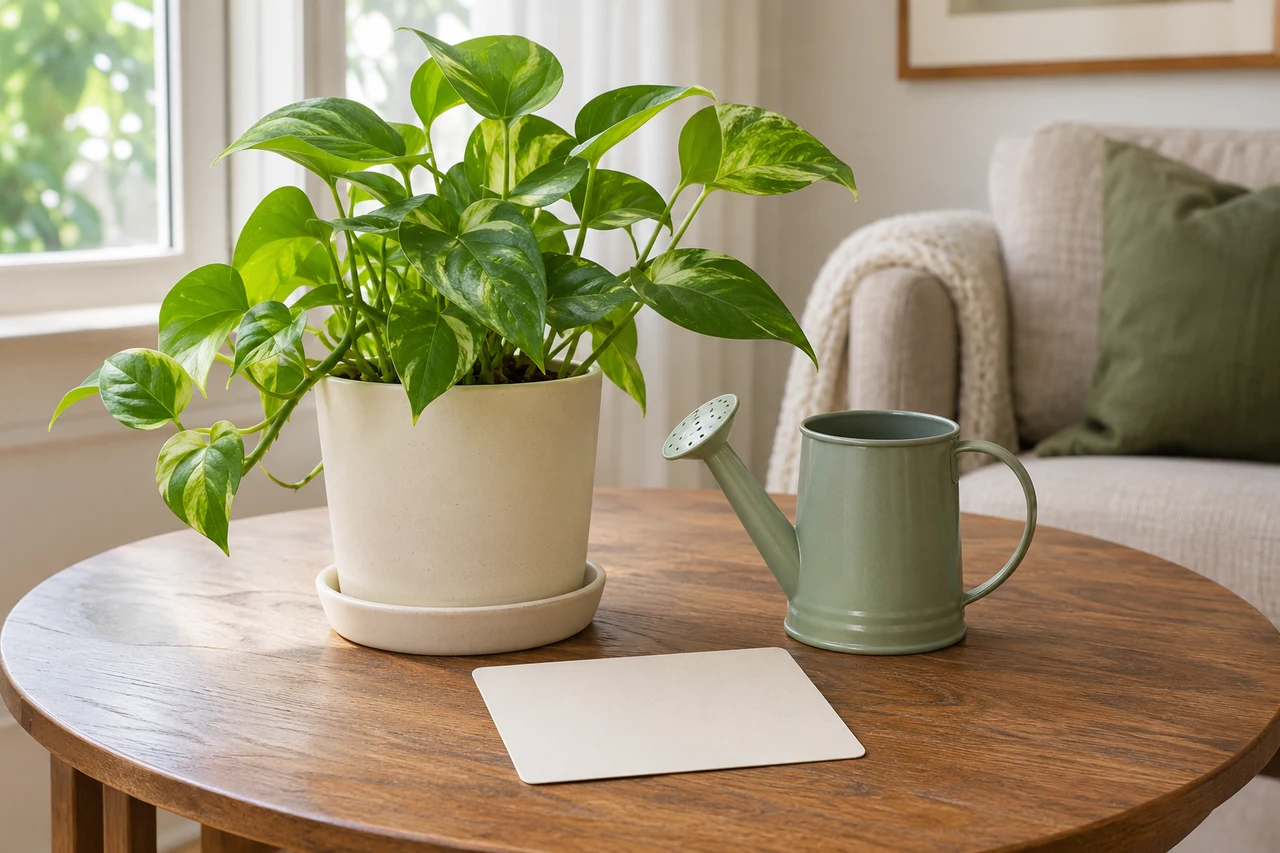
A request to “water the plant while I’m away” can leave a helpful person guessing about both the plant and the task. A better handoff keeps the actual identity, care guidance, checking method and contact arrangement together. This original workflow concerns one plant during an imagined week away. It gives no universal watering interval or quantity and makes no claim that the plant or a proposed watering system has been tested.
Identify the plant and the container first
Before departure, establish the actual plant’s identity from reliable information and keep its relevant care guide with the note. Identify the particular pot and location so the helper is not asked to choose among similar-looking plants. Do not invent a species merely because its leaves resemble a photograph. If identification or a care requirement remains uncertain, resolve it before delegating that task.
Keep the container arrangement understandable: which vessel contains the growing plant, whether an outer pot or tray is present and how the actual care instructions address drainage. This is an information check, not permission to repot. The helper should not need to dismantle an unfamiliar decorative arrangement to discover what the owner meant.
Demonstrate the check the plant actually needs
Show the helper the moisture-checking method supported for the actual plant and growing medium. Explain how its result informs the next action under that care guidance. A calendar note can say when the helper has agreed to check; it should not silently require watering at every visit regardless of the condition found.
RHS holiday-care guidance distinguishes summer and winter circumstances and warns about problems from both overestimating and underestimating water requirements. It also treats self-watering containers as a longer-term growing arrangement rather than a reason to repot for a brief holiday. This workflow supplies no wick, reservoir, bag-cover or automatic-device installation instructions.
Agree the helper’s task and its limits
The original handoff conversation has four parts: identify the plant, show the relevant check, demonstrate any permitted watering and drainage process, then let the helper explain the plan back in their own words. The owner supplies the actual plant-specific details. No measured water dose or claim that one demonstration proves future plant health is made here.
Agree who will visit, how they can access the plant and how to reach the owner if the note does not fit what they find. If they cannot perform a task safely or understand the instructions, that is a reason to stop and contact the responsible person. A favor to check one plant is not automatic consent to move heavy pots, prune, apply treatments or manage the whole household.
Keep the return note small and useful
A simple visit record can state the date, what was checked and what action was actually taken. Leave an unresolved concern visible rather than rewriting it as “all fine.” On return, the owner can use that record to resume the ordinary routine. The note is not a diagnosis of pests, disease or a changed growing condition.
Before buying a holiday-watering kit, consider whether the actual difficulty is the missing handoff information. RHS describes a helper as an option for longer absences, but neither that advice nor this week-away example guarantees survival. The useful purchase, if any, follows the plant’s real requirements and the agreed care arrangement. Plant and pet safety require their own species-specific assessment.
Sources & further reading
Published sources for the details and examples discussed in this story.