A rule such as 'keep only what you use every week' offers a satisfyingly simple answer to a complicated shelf. It also treats a soup ladle, a holiday serving plate and a personally meaningful object as though they were applying for the same job. They are not. Frequency can describe part of an object's place in a home; it cannot describe every reason for keeping it. The examples that follow are hypothetical, not accounts of a household we visited.
Useful on the right occasion
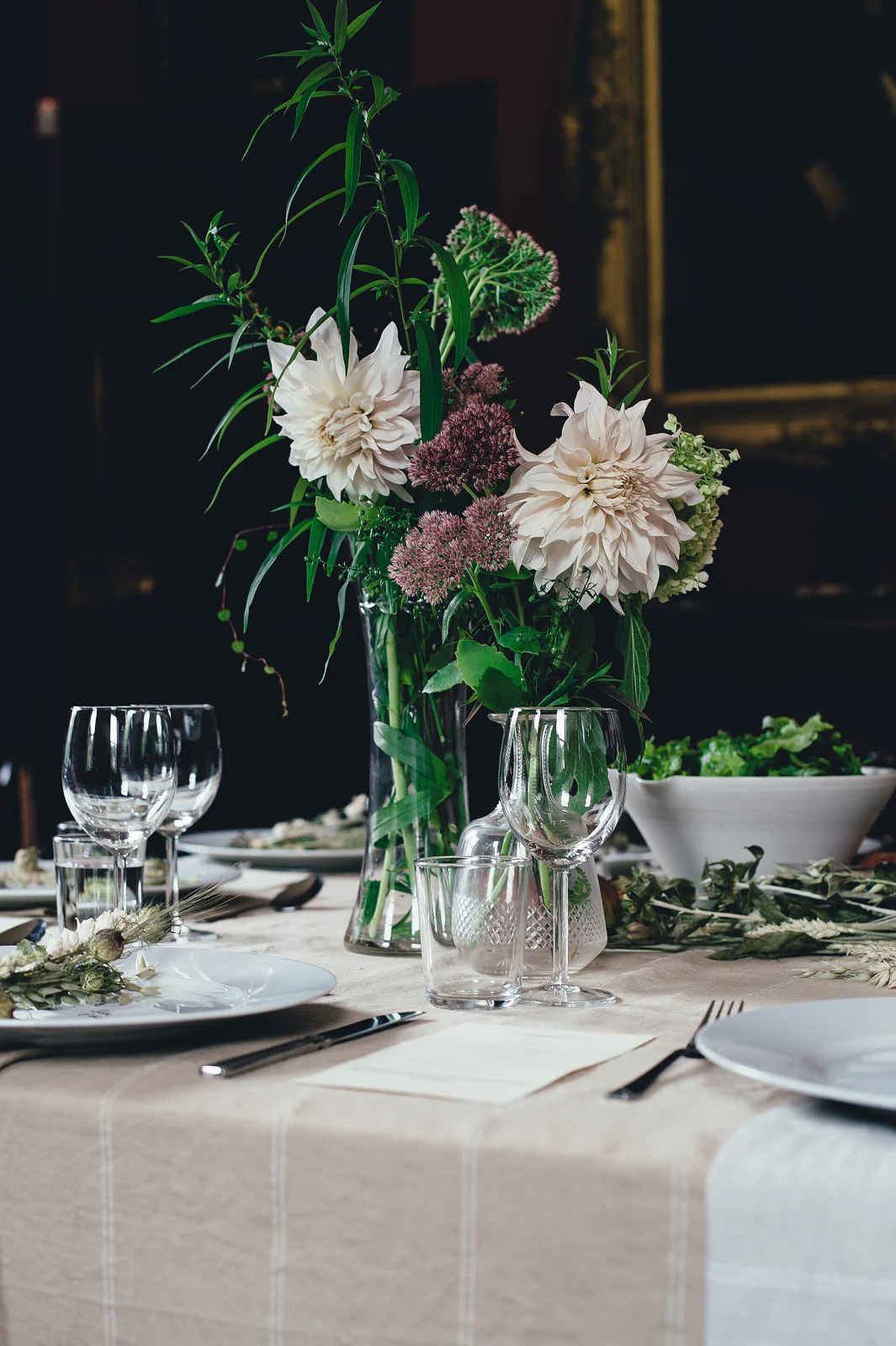
Imagine a serving dish brought out when several people eat together. Its usefulness is occasional by design. Counting the days it stays in the cupboard tells us little about whether another ordinary plate can do the same work when the occasion arrives. A home does not have to behave like a hotel storeroom, but it is reasonable to distinguish an object waiting for a real recurring occasion from one kept for an entirely imagined future.
The question can be specific without becoming a deadline: what occasion would make this the thing you would reach for? 'Whenever we have enough people for the larger table' describes a role. 'It might be useful somehow' leaves the role open. Neither answer automatically commands keeping or discarding; they simply reveal different reasons for occupying the same amount of space.
Meaning is another kind of role
Now imagine a small object kept because it recalls a person or an important period. Asking it to perform a household task misses its purpose. The Smithsonian's Division of Home and Community Life describes everyday material culture through objects people use, save and cherish, and the stories those objects carry. That curatorial perspective does not prescribe anyone's possessions. It does offer a useful counterweight to the idea that only frequent practical use counts.
Meaning need not be grand enough for an exhibition. Nor does someone owe visitors an intimate explanation. A privately understood connection can be enough. What deserves caution is inventing a biography to justify keeping something, or assuming that another person's attachment must be proved in the same way as our own.
A good reason still occupies real space
A third hypothetical object is a large spare chair that would be convenient for one hoped-for gathering. Unlike the small keepsake, it changes the room every day it stays. Its possible future use and its present footprint belong in the same thought. Recognizing that tension is not hostility toward hospitality; it is an honest description of what the current home can hold.
Space is shared when a home is shared. One person's explanation of an object's meaning does not by itself decide where everyone else's daily activities must happen. That conversation is about the relationship between a particular possession and a particular place, rather than a competition over whose reasons sound more practical.
Keep the reasoning conditional
It is possible to decide that the serving dish has a recognizable role, the small object has a private meaning and the large chair makes an everyday activity too difficult. It is equally possible to reach different conclusions in a different home. The value lies in naming the reasons separately, not arriving at a universally approved number of objects.
Occasional use should neither be a disguised accusation nor a permanent exemption from thought. It is one description among several. A considered home can include things that wait, things that work and things that simply matter, while acknowledging that none of those categories creates unlimited room.
Sources & further reading
Published sources for the details and examples discussed in this story.