Loving a color and wanting to wear a large area of it are different preferences. You might enjoy a vivid orange object every day while repeatedly passing over an orange top. That is not necessarily a confidence problem to overcome. A smaller place for the color may be closer to what you actually want from it. These fictional wardrobe stories consider both the small note and the main field without declaring one the more adventurous choice.
Nora wants the color to interrupt familiar clothes
Imagine Nora liking vivid orange but enjoying a familiar group of charcoal and pale neutral clothes. Her imagined orange top becomes the first thing she notices in almost every combination. She admires it in isolation, yet keeps choosing the quieter tops when getting dressed. Buying another orange garment would repeat the unresolved question rather than prove that the color belongs in her life.
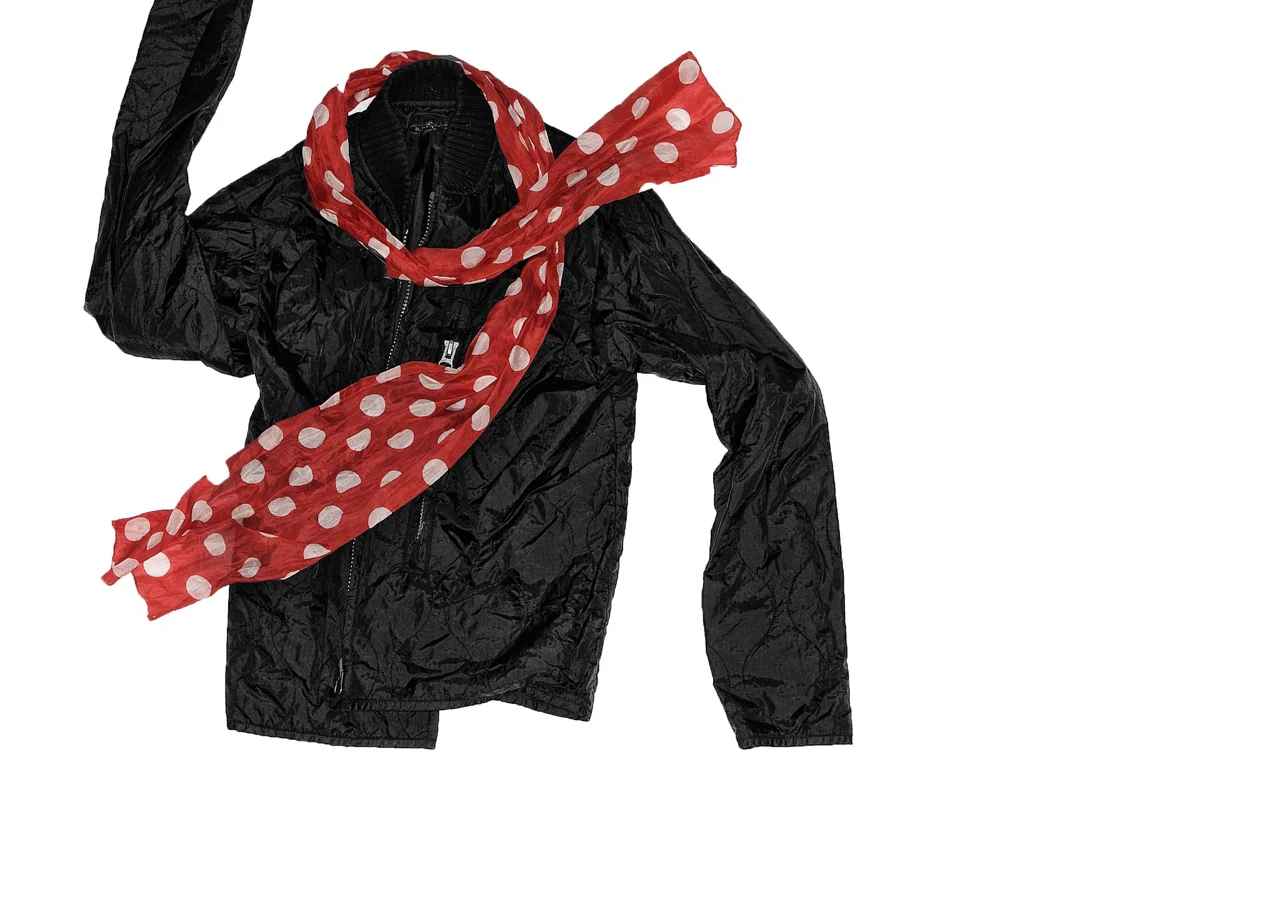
Now give Nora a small orange accessory she genuinely wants to use. The color appears as a limited interruption within the familiar clothes, rather than supplying their largest area. That is the relationship she was looking for. The point is not to acquire an arbitrary token accessory to satisfy a palette rule. If no suitable small item interests her, she can enjoy orange elsewhere and buy nothing for the wardrobe.
Sam wants the clothes to begin with the color
Sam’s invented wardrobe starts from a different intention. Sam wants a vivid green top to be the central fact of a familiar outfit, with the trousers and outer layer taking quieter roles. A small green detail would feel incidental because the broad color area is precisely the pleasure being sought. Substituting an accessory would solve a problem Sam does not have.
Sam can choose the top without needing to collect matching shoes or a bag. The large field has already given the green a definite place. Nora’s small interruption and Sam’s broad field are both deliberate, but for different reasons: one protects a familiar overall appearance while introducing a note, and the other builds the appearance around the color itself.
Use color vocabulary without making a personality test
Getty’s formal-analysis material distinguishes hue, value and intensity: the color name, its lightness or darkness, and its brightness or dullness. That vocabulary helps keep the shopping question specific. A favorite vivid green is not interchangeable with every item labeled green. Nor does a larger area necessarily express more enthusiasm for the color.
These stories offer no rule about which skin tone, age or personality may wear a vivid shade. They also make no calibrated match between real products. Nora and Sam are imagined people with different desired relationships between a color and their clothes, not examples of a universal psychological effect.
Buy the role you keep wanting
Before purchasing a larger garment simply because you love its color, describe where you want that color to sit in the outfit. Is its small interruption the interesting part, or do you want the clothes to begin with it? If the answer remains unclear, an existing item can help you think without committing to another purchase.
For an actual item, suitability still includes fit, handling and care, none of which the color alone establishes. You may ultimately prefer a vivid garment, a modest accessory, or no wearable version at all. A favorite color does not impose a minimum area you must wear to count as someone who loves it.
Sources & further reading
Published sources for the details and examples discussed in this story.