A pot bought for tonight’s leaves and a plant intended for continued growing can begin with different expectations. RHS basil guidance explicitly distinguishes crowded supermarket pots from other young plants. The original home-growing plan below keeps that purchase decision connected to conditions, care and harvesting. It uses the RHS’s UK growing context and identifies no specimen from a generated image. No plant was bought, divided, watered or harvested for this article.
Choose the intended growing project before the pot
Imagine wanting a regular small supply of culinary basil rather than one immediate recipe quantity. Ask the supplier for a correctly named plant and its applicable care information. Choose an actual culinary variety appropriate to that intention; the common name alone does not identify every species, cultivar or household suitability question.
RHS describes supermarket pots as short-term harvesting plants that are often crowded. It recommends keeping supermarket-bought basil indoors in containers for biosecurity reasons. A nursery young plant and a supermarket bunch-in-a-pot therefore should not be treated as the same starting project. This guide gives no dividing or propagation procedure. If the selected plant requires that work, follow the complete appropriate instructions separately.
Give the plant a real growing place
In its UK guidance, RHS describes basil as tender and needing warmth and sunshine. Outdoor planting belongs after suitable seasonal preparation in a warm, sunny, sheltered location; young plants need hardening off. The guide describes a container at least 20 centimetres wide and deep, peat-free multipurpose compost and planting at the previous level.
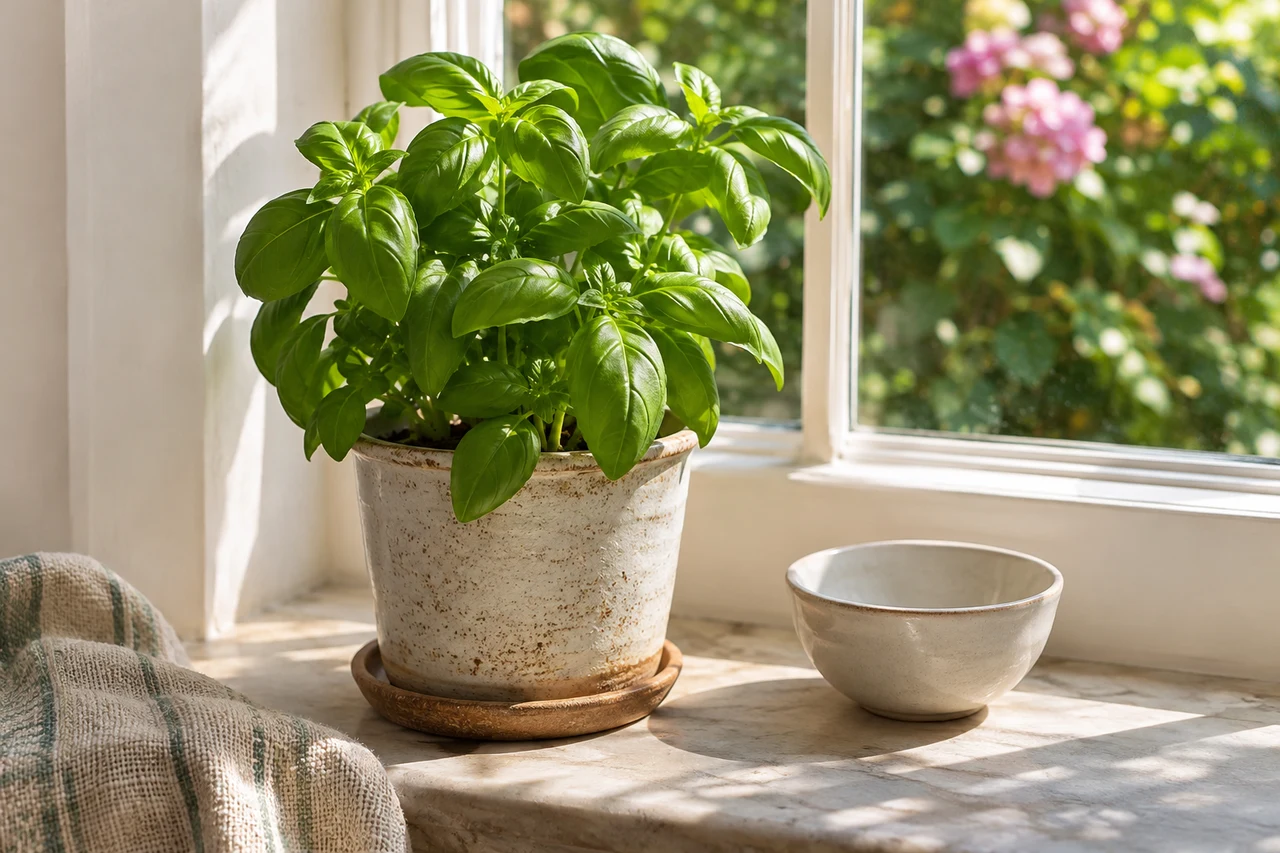
For the imagined home, choose between an appropriate indoor location and the supported outdoor plan before buying a decorative cover. Establish actual local conditions and access for care. A bright room viewed from the doorway does not describe the plant’s precise position, and these UK seasonal statements should not become a universal calendar for every climate.
Connect moisture checks with the leafy harvest
RHS calls for evenly moist growing conditions, with regular checks for container plants; its watering advice avoids splashing leaves and favors morning watering where possible. It describes taking a few shoot tips regularly for bushier growth. Flower-stem removal can delay flowering and retain leaf quality, while allowing flowers later is another deliberate choice.
The household’s original care note can now connect the tasks: check the identified plant and growing conditions, carry out the applicable care, then take only the leaves actually wanted. A weekly recipe plan does not create a fixed watering dose. If the plant cannot supply the intended quantity, buy the additional ingredient rather than stripping it to satisfy an imagined yield.
Let the next purchase follow the actual difficulty
Keep the plant label and the relevant guide with the care record. Note real observations when they occur, without diagnosing every change as a disease or claiming that a decorative pot caused it. This article supplies no pesticide, fertilizer concentration or treatment for a poorly identified problem.
A suitable container, growing medium or additional named plant may answer a specific need later. An automatic watering device does not follow automatically from wanting more basil. The complete plan joins the correct starting plant, an appropriate growing place, condition-led care and a manageable harvest; it establishes neither a measured crop nor guaranteed survival. Prepare any harvested food through appropriate food-handling guidance separately.
Sources & further reading
Published sources for the details and examples discussed in this story.