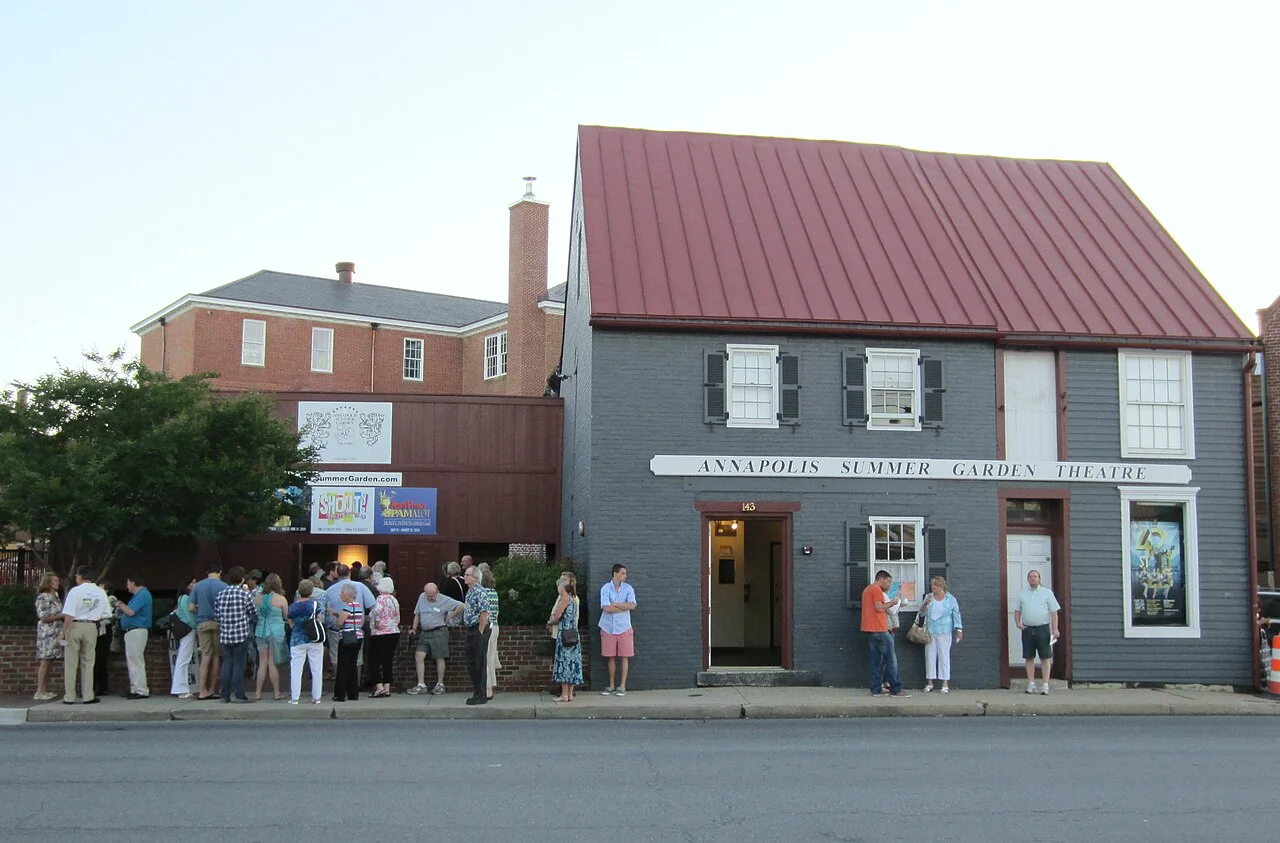
A waterfront can make a city look outward, toward trade and travel. A civic building can make it look inward, toward the institutions that decide public life. Annapolis offers a way to consider those views together. This feature interprets the National Park Service's published account of a small selection of downtown places. It is not a report of a walk, a complete itinerary or a promise that a particular building will be open.
Begin with the relationship, not the distance
The NPS account starts at City Dock and connects it with Annapolis's wider political, cultural and maritime life. It describes the dock as a place where waterborne commerce linked the city to the Chesapeake Bay and beyond. The Maryland State House appears in the same account as a place where the Continental Congress met. Those two descriptions offer different kinds of connection: movement through a port and the exercise of political authority.
Reading them together changes the question from 'How many landmarks can I collect?' to 'What sort of public story links this shoreline with this seat of government?' That question does not make the buildings interchangeable. It gives a limited visit an interpretive focus without pretending that a short selection can explain the whole city.
Notice whose lives enter the account
The NPS description also includes the Butler and Maynard Burgess Houses in its discussion of free and enslaved African American lives, and identifies the Banneker-Douglass-Tubman Museum with African American heritage and activism. That is an important change of scale. Civic history is not confined to the rooms in which formal institutions met; houses and community institutions also belong in the account of who shaped a place.
This reading should not turn a brief location description into an invented biography. The page does not supply every resident's story or settle the relationship between every stop. It offers a reason to seek the fuller interpretation from the relevant institution, rather than assume that an attractive facade tells its own complete history.
A small selection can reveal its limits
Choosing the dock, the civic setting and an African American history context produces a particular lens. It leaves other subjects less visible: religious life, education, the Naval Academy's maritime connections and the many ordinary activities that a landmark account cannot fully contain. Naming those omissions makes the selection more useful, not less. It lets a traveler decide whether to pursue this relationship or choose another.
One way to carry the idea into a visit is to keep a single question beside the place names: 'Which kinds of connection are described here, and whose work or authority made them possible?' It can guide attention without turning the city into a timed exercise. There is no requirement to finish every named stop for the question to remain interesting.
Interpretation and access are separate
The NPS page cautions that sidewalk conditions vary and that some stops involve stairs or uneven surfaces. A published historical relationship therefore does not establish a suitable route for every visitor. Current entry arrangements, accessibility details and building hours belong with the actual sites and route conditions, checked before making commitments.
The appeal of this small Annapolis lens lies in its contrast: an outward-facing waterfront, a center of formal public life and histories carried through homes and institutions. It invites a more deliberate look at the places selected, while leaving room for the parts of the city that remain outside the frame.
Sources & further reading
Published sources for the details and examples discussed in this story.